What Day Is Creole Day In St Lucia, And Is There A Food Tasting?
Creole Day, or Jounen Kweyol, falls on the last Sunday of October at the end of Creole Heritage Month. Here is what it involves and which tasting experiences run on the island.
If the last Sunday of October is in your travel window, start with the guided tasting walks hub, because the walking food experiences that suit a Creole Day trip all sit in that family, from market walks in Castries to island-wide food and rum days.
| Fact | Detail |
|---|---|
| Creole Day date | The last Sunday of October |
| Festival name | Jounen Kweyol, closing Creole Heritage Month |
| Month of events | Throughout October |
| Festival history | Began over forty years ago |
| Traditions | Kwéyòl language, music, madras dress, cassava farine roasting |
| National dish | Green fig and saltfish |
| Currency | Eastern Caribbean dollar, EC$2.70 per US$1 |
| Tap water | Described by stlucia.org as safe to drink |
Creole Day, known locally as Jounen Kweyol, falls on the last Sunday of October, and it brings Creole Heritage Month to a close after a full four weeks of events across the island. There is no food tasting product tied to Creole Day itself: the tastings covered here are separate bookable experiences with their own dates, and the booking calendar for each one shows when it runs. October visitors can still eat well around the festival.
The festival's roots run deep. The Tourism Authority describes it as a celebration that began over forty years ago, built around the Kwéyòl language, traditional music, madras dress and cassava farine roasting. Communities across the island mark the month, and the closing Sunday is the peak. You can read the official outline on the Creole Heritage Month page, which confirms every date fact above.
One point worth settling early: because no festival-attached tasting of that kind exists, planning a Creole Day food trip means pairing the festival itself, which you attend as a visitor, with a separately booked tasting before or after. The market walks and cooking experiences below run on calendar dates of their own, and October is also inside the main cruise season, October to April, when up to five ships can call into Castries in one day, so the popular morning slots fill early. Check availability on whatever you want most before you lock the rest of the week.
What Jounen Kweyol Actually Celebrates
Jounen Kweyol celebrates the Creole identity of Saint Lucia: the Kwéyòl language, the food, the music and the madras dress that communities wear on the day. The Tourism Authority frames it as the culmination of Creole Heritage Month, a festival of over forty years' standing whose traditions include cassava farine roasting and open celebration of the island's French and African heritage alongside its Caribbean roots. It is a cultural day first and a food day by consequence.
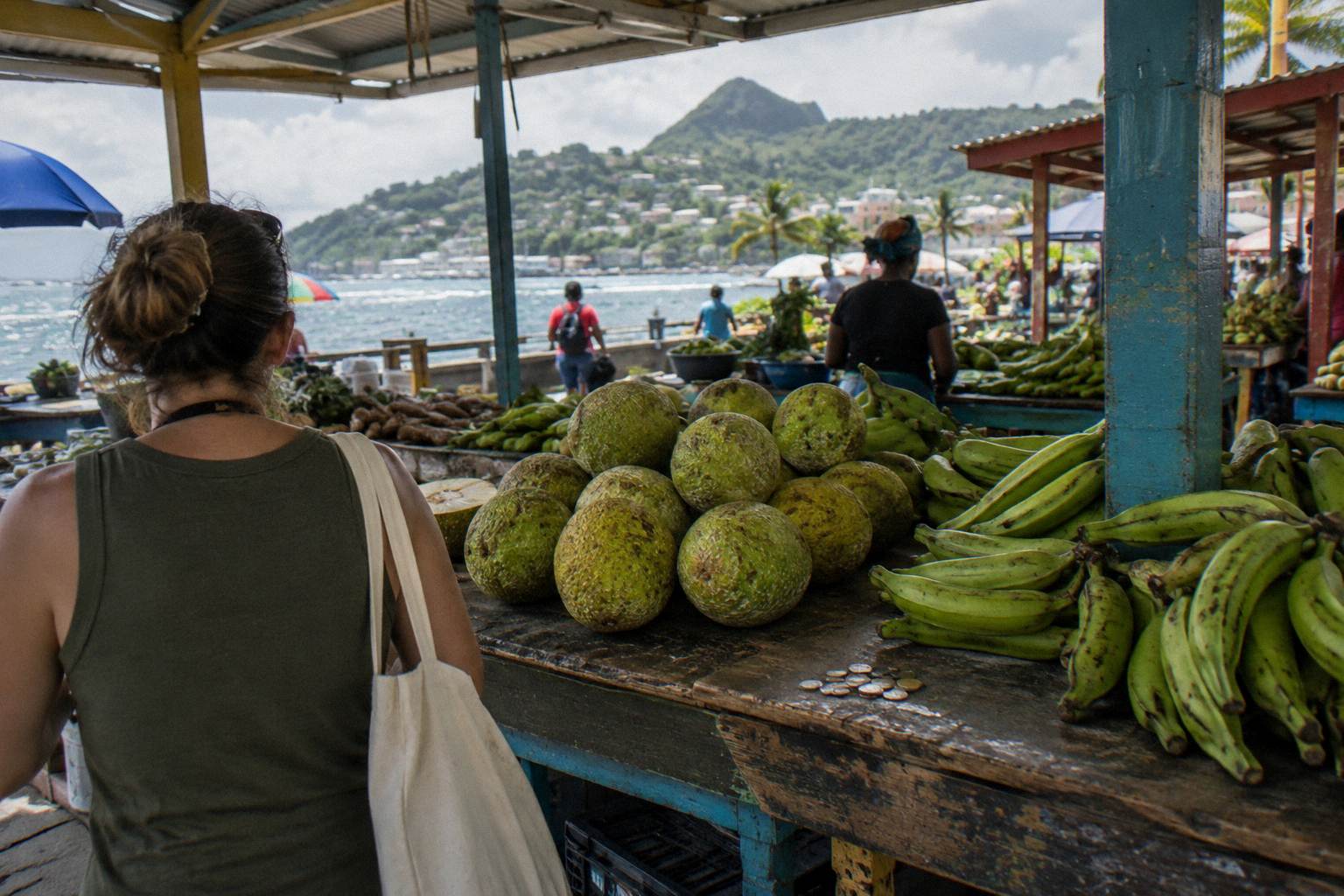
That consequence is a real one, though. The food traditions the festival spotlights are the same ones the island eats all year, so a visitor who arrives for the last Sunday of October meets a concentrated version of the everyday table. The national dish is green fig and saltfish: unripe green bananas, called figs locally, boiled and served with salt-cured cod cooked with herbs and spices, usually alongside fried plantains, callaloo soup or breadfruit, which the Tourism Authority calls a sweet, potato-like staple. The cuisine as a whole is described as a Creole blend of African, French and Caribbean influences, drawing on fresh seafood, tropical produce, spices and cacao grown in volcanic soil. Those descriptions come from the Saint Lucia tourism culinary page, and they explain why an ordinary Tuesday lunch in Castries already tastes like a festival rehearsal.
The day also gives context to the drinks side of the island. Rum has been made here since the distilleries of Dennery and Roseau amalgamated in 1972 to form St. Lucia Distillers, whose range now spans over 25 rum and rum-related products. Nothing about Creole Day requires a distillery visit, but visitors often pair the two, and the tasting experiences that include rum sit later in these comparisons.
How Creole Heritage Month Builds Toward The Last Sunday
Creole Heritage Month runs throughout October, with Jounen Kweyol on the last Sunday as its finale. The Tourism Authority presents the month as a build of community events celebrating Kwéyòl language, music, madras dress and cassava farine roasting, traditions the festival has carried for over forty years. The closing Sunday is the busiest single day, and it is the one date travellers plan around.
For trip planning, the practical reading is simple: any October visit overlaps some part of the month, and the earlier in the month you arrive, the more of the build-up you catch before the finale. Print no venue or year-specific date from the calendar here, because the community locations shift; what stays fixed is the structure, a month of events ending on the last Sunday.
| Creole Heritage Month fact | What it means for a visitor |
|---|---|
| Held throughout October | Any October trip overlaps part of the festival |
| Ends on the last Sunday (Jounen Kweyol) | The peak day; plan transport and bookings around it |
| Began over forty years ago | An established tradition, not a new event |
| Traditions include madras dress and Kwéyòl music | Expect colour, drums and community gatherings |
| Cassava farine roasting | A food tradition you may see demonstrated |
| No tasting product tied to the day | Book food experiences separately on their own dates |
Weather is part of the October calculation too. The rainy season runs June to December with showers that are usually brief, average temperatures sit between 23 and 31 C, and the Atlantic hurricane season spans June 1 to November 30. The Tourism Authority notes a Holiday Guarantee that lets a trip be cancelled or rescheduled before arrival at no cost in the event of a hurricane, which softens the risk of an October booking.
The Foods That Define Creole Cooking In St Lucia
Green fig and saltfish leads the table as the national dish, but the wider Creole kitchen runs from bakes and saltfish accra at breakfast to roadside roasted corn, grilled seafood and barbecued meats at sunset. The Tourism Authority describes all of these, along with cocoa tea made from freshly ground cocoa sticks, a drink tradition the FAO traces to cacao's arrival on the island in the 1660s. Together they form the menu a tasting walk samples from.
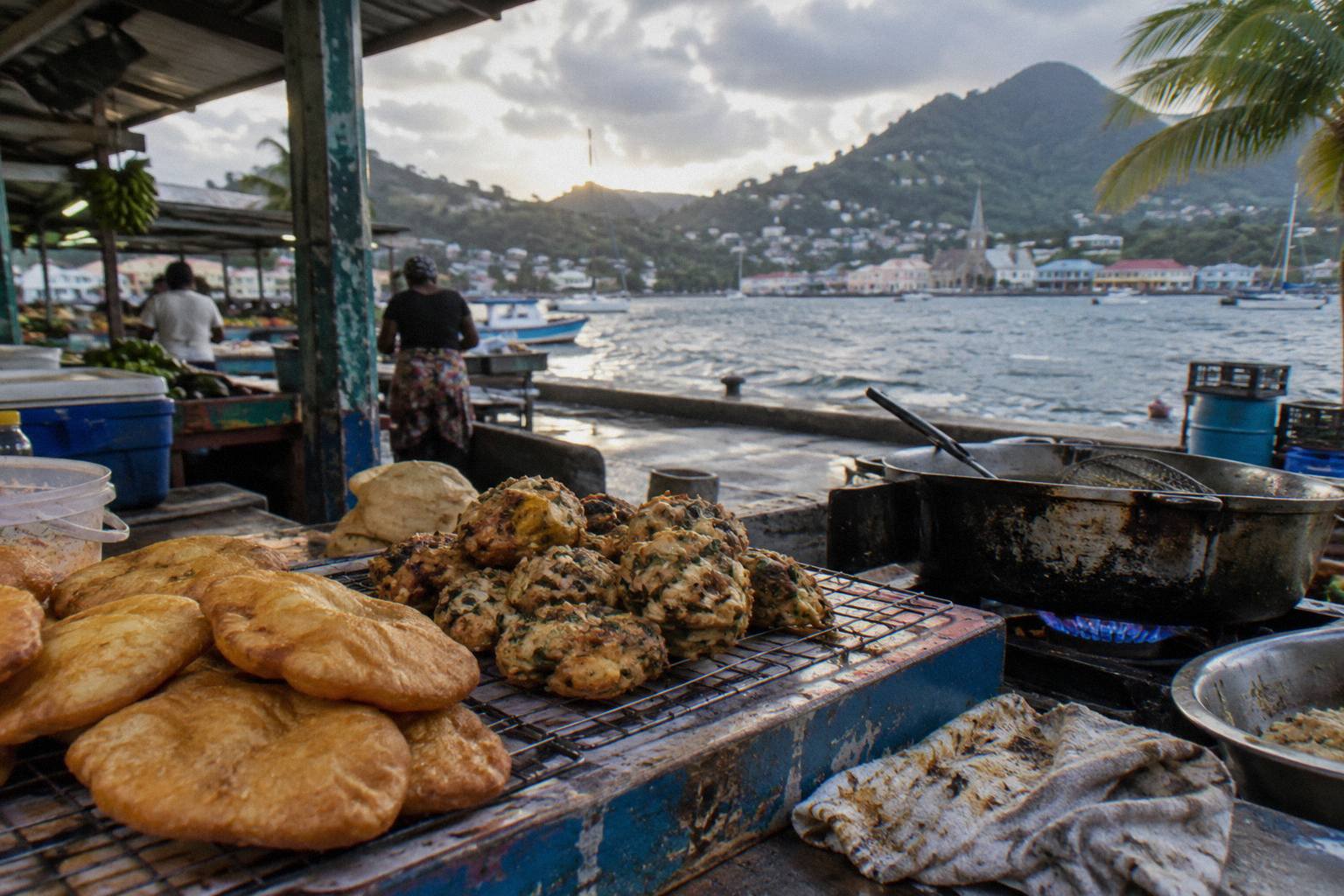
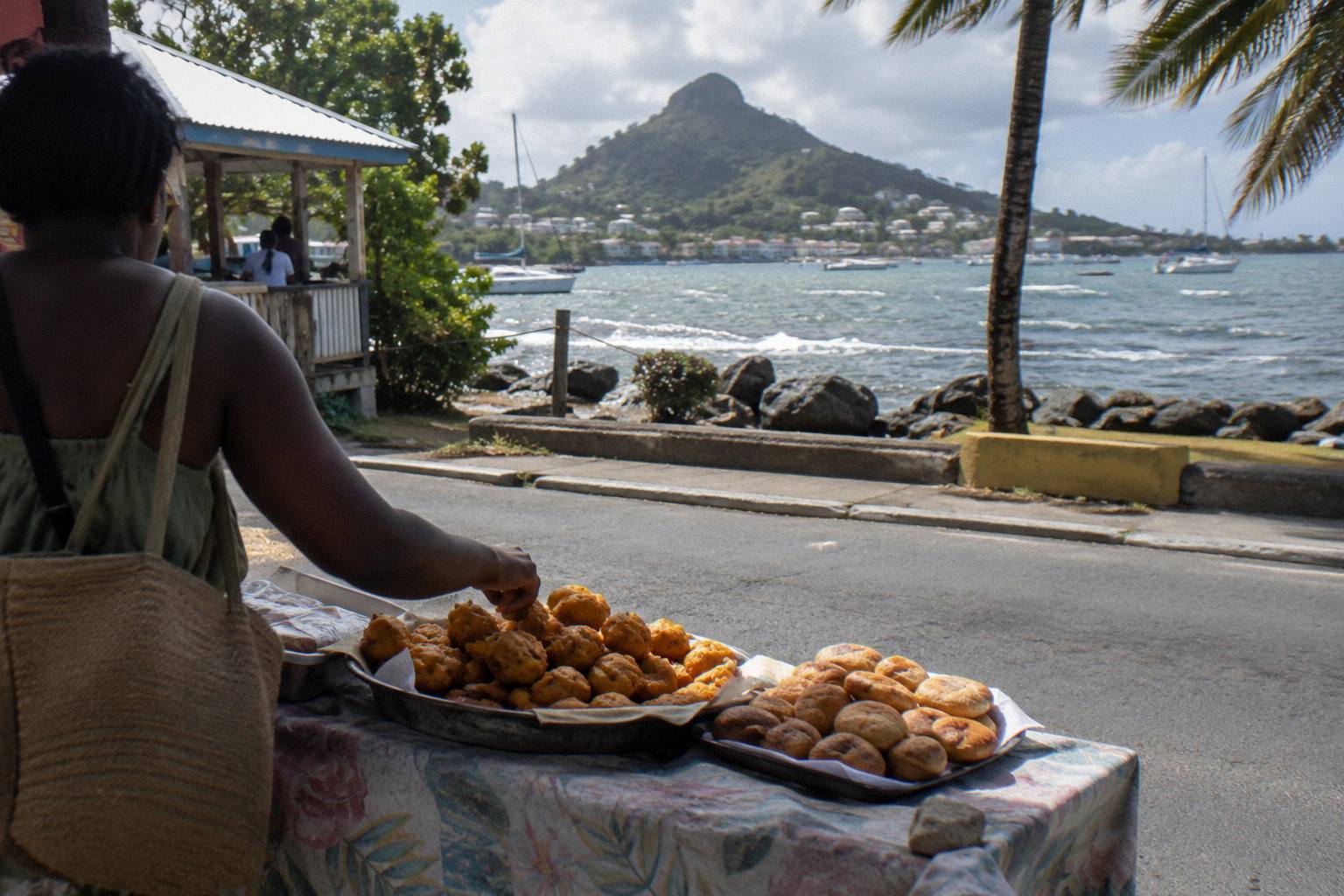
The street-food layer is where most visitors start. Bakes are golden rounds of fried dough, known elsewhere as Johnny cakes or floats, paired with saltfish, cheese, jam or smoked herring, and treated as a grab-and-go food. Saltfish accra are deep-fried saltfish fritters seasoned with herbs, peppers and local spices, found at markets, roadside vendors and community events. As the sun sets, roasted corn, grilled seafood and barbecued meats appear at roadside stands and community gatherings. The Saint Lucian street food page is the source for each of those descriptions.
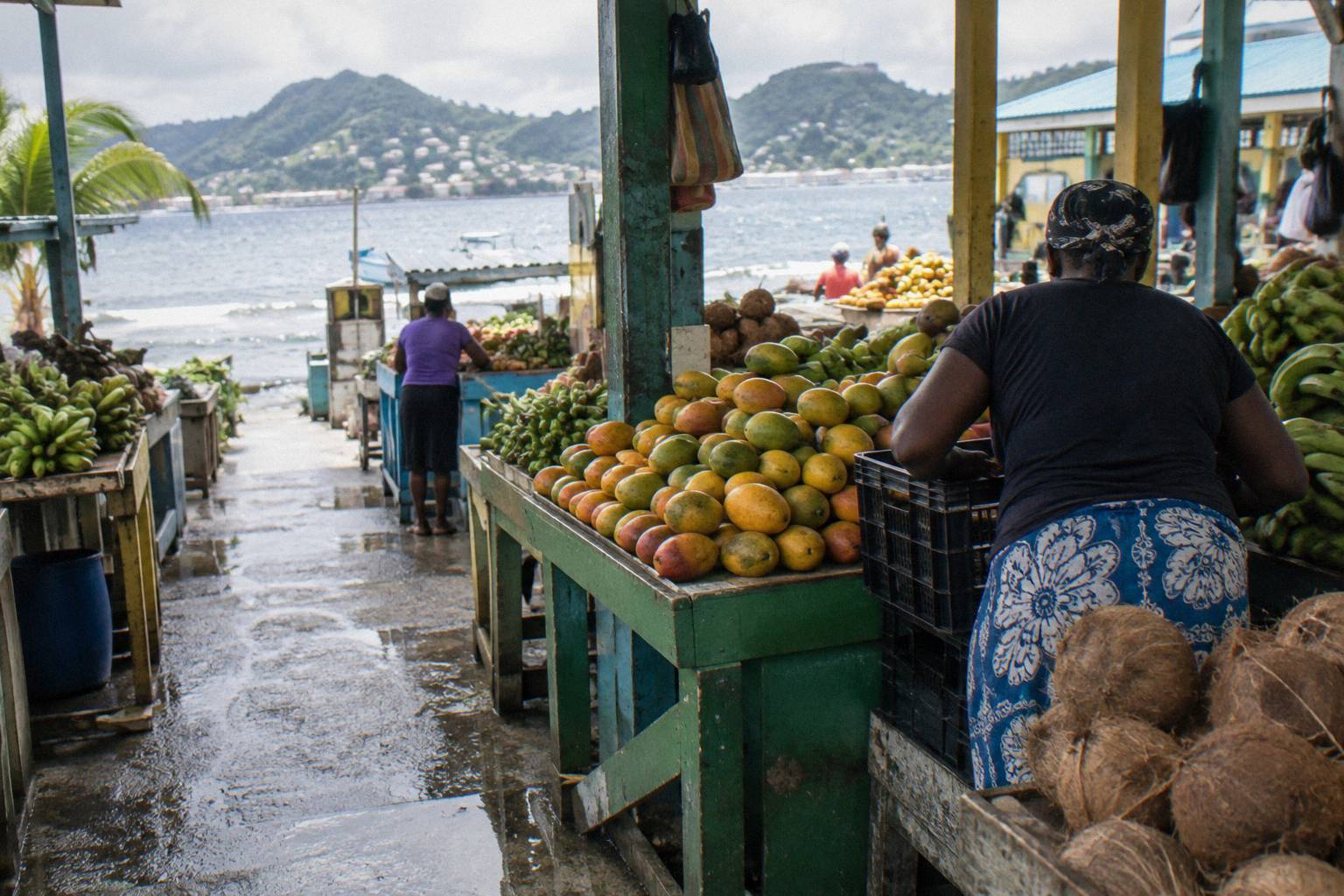
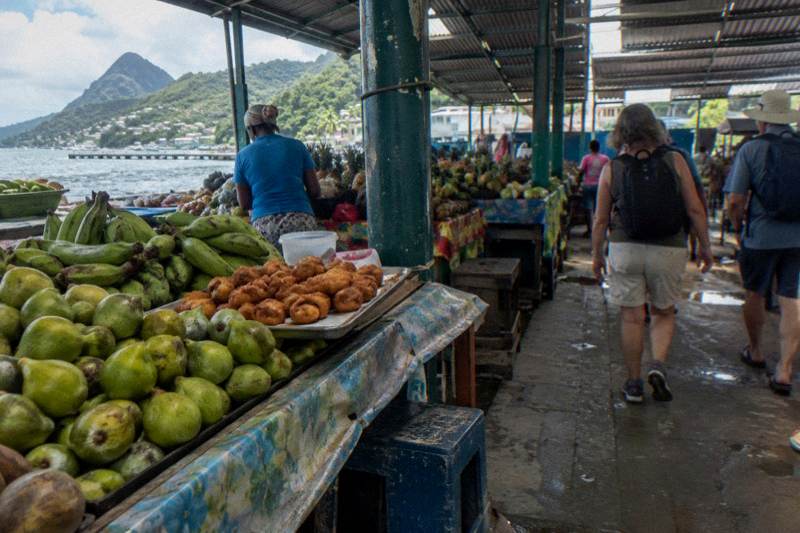
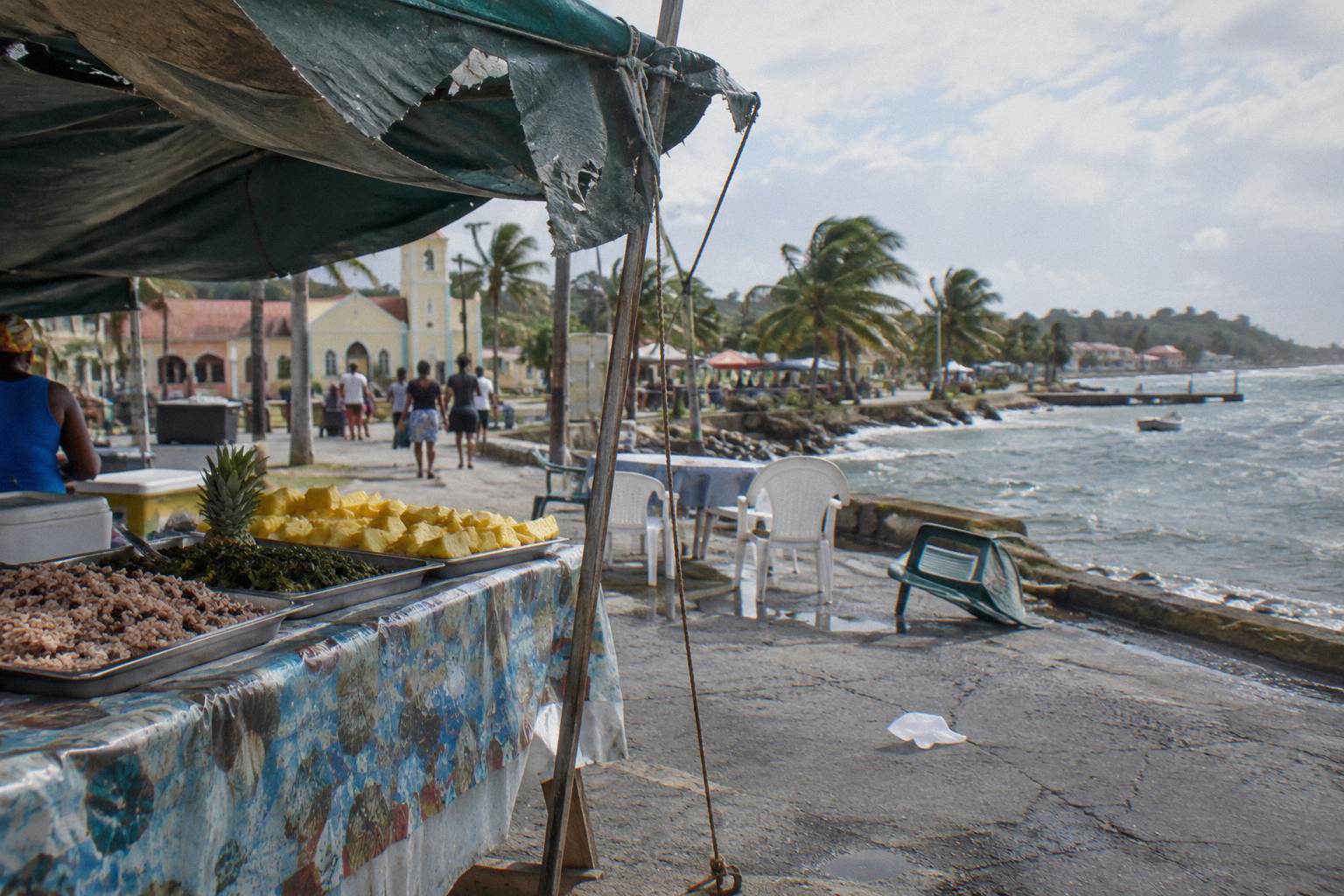
The market is the other anchor. Castries Central Market has been open since 1891, trades every day, and is busiest on Saturday, when farmers from all parts of the island come to sell; breakfast stalls open from around six in the morning, and over 10 local mango types appear in season, among them Julie, Graham, Starch and Long Mango, with coconuts opened on the spot. Payments run in Eastern Caribbean dollars, most vendors also take US dollars, and small bills are useful. The deeper background on dishes and market rhythm is in the Saint Lucian dishes a tasting walk covers guide, which unpacks what each stop on a walk typically involves.
Which Tasting Experiences Run Through October
The tasting experiences are separate products from Creole Day, each running on its own calendar dates, and none is tied to the festival. The closest fits for an October food trip are the Castries market walks, the island-wide food and rum driving day, and the chef-led culinary experiences, all bookable independently and all with free cancellation up to 24 hours before start. Check the booking calendar for the date you want.
Start with the featured option. The Castries Market Walking Food Tour by LUCIAN FOOD TOURS lasts 2 hours 30 minutes, costs from US$85 per person, and carries a 4.9 rating from 33 reviews. It includes samples of local dishes, a Saint Lucian guide, and local alcoholic or non-alcoholic beverages, with a minimum age of 0, so families can join. It meets at Castries Market, which makes it a natural pairing with a Saturday morning or an early arrival before the festival Sunday. See the Castries market walking food tour page for full details, and check the live price there for your date, since amounts vary by date and group.
For a bigger day, the St. Lucia Food and Rum Tour run by The Other Tour St. Lucia is a private, island-wide experience of 4 to 6 hours from US$205 per person, rated 5.0 from 243 reviews, with a local breakfast and lunch, snacks, live cashew roasting, alcoholic beverages and free pickup from all locations in St. Lucia. The Flavors of St Lucia Culinary Experience from Barefoot Holidays, 3 hours from US$130 per person and rated 4.8 from 43 reviews, sits between the two: a chef demonstration with food and drinks included, and hotel or port pickup for northern hotels. All amounts are US dollars, per person as the tours quote them. Everything else covered here is indexed on St Lucia Food Tour.
A rum-focused alternative is the St Lucia Rum Tasting and Tour from Barefoot Holidays, 3 hours 30 minutes from US$90 per person, rated 4.3 from 96 reviews, which includes distillery entry, rum tastings, a guide and a Castries Market stop, with hotel pickup and drop-off for north island hotels.
Comparing The Market And Island Tasting Walks
The market walks run 1 to 3 hours and cost US$65 to US$85 per person, while the island-wide driving day takes 4 to 6 hours and starts at US$205 with meals and pickup included. Choose based on time, budget, and style: cruise passengers with a half day ashore suit the walks, while resort-based travellers with a full day suit the drive.
| Experience | Duration | From price per person | Format | Rating and reviews |
|---|---|---|---|---|
| Shortest Castries Tasting Walk (City Walkers) | 1 hour to 1 hour 30 minutes | US$65 | Private | 4.9 from 21 reviews |
| Castries Market, Snacks Included (Lucian Food Tours) | 2 hours 30 minutes | US$85 | Private | 4.9 from 33 reviews |
| Rodney Bay Snack Walk (Lucian Food Tours) | 2 to 3 hours | US$74 | Private | 5.0 from 110 reviews |
| Rum Mix Session, Rodney Bay (CHIC HOSPITALITY) | 3 hours | US$95 | Shared | No star claim, few reviews |
| Island Drive, Meals Included (The Other Tour St. Lucia) | 4 to 6 hours | US$205 | Private | 5.0 from 243 reviews |
Prices vary by date and group, and the booking page for each product shows the price for the date you choose. Two or three sentence-level checks are worth making before you commit: see dates for the morning slots first, since the market is liveliest early, and check the live price once your dates are fixed.
The Rodney Bay walk deserves its own word. The Rodney Bay Food Tour by LUCIAN FOOD TOURS, 2 to 3 hours from US$74 per person and rated 5.0 from 110 reviews, makes five tasting stops and includes homemade spice rum and other local favourites for guests 18 and older. If you are staying in the north rather than near Castries, it saves the drive and still covers the street-food canon. Budget expectations are covered in more depth in the what tastings cost in St Lucia guide.
Planning A Food-Focused Trip Around Late October
Anchor the trip on the last Sunday of October for Jounen Kweyol, book a market walk for the Saturday before it, when Castries Market is busiest, and leave a spare day for a longer food and rum drive or a cooking experience. October sits in the rainy season and inside the hurricane season, so keep free-cancellation terms in view, carry small US bills or Eastern Caribbean dollars for market stalls, and book the tastings before you finalize the rest.
Money mechanics are straightforward. The Eastern Caribbean dollar is pegged at EC$2.70 per US$1, US currency is widely accepted and change often comes in EC$, and hotel and restaurant bills carry 10% VAT and a 10% service charge, sometimes already in quoted prices. Tipping is not added automatically; it is customary at about 10% to 12% of bills and accepted by taxis and tour guides. Tap water is described by stlucia.org as safe to drink, which simplifies long walking mornings.
Pair the festival day itself with lighter commitments. The street-food rhythm of a Saint Lucian weekend, Friday night in the fishing villages, Saturday early at the market, Sunday for church, family lunch and the beach, is described by the Tourism Authority's own weekend blog, and Jounen Kweyol simply amplifies the Sunday. The Gros Islet Friday Night Street Party runs every Friday from sunset and has taken place every week for more than 50 years, with the crowd dancing well past midnight; a Gros Islet street party eating guide covers that night separately, since it falls the Friday before most Creole Day Sundays.
What Trips People Up Before You Book
The recurring mistakes are assuming a tasting is part of Creole Day, printing a wrong festival date from secondary coverage, and booking the wrong format for the time available. No tasting product covered here runs as a festival event, the only confirmed date rule is the last Sunday of October, and a 1-hour walk and a 6-hour driving day suit completely different itineraries. Check ages, pickup scope and cancellation terms before paying.
Minimum ages differ sharply and catch families out. The market walks and the Rodney Bay Snack Walk take all ages, the Rum Mix Session starts at 12, the island driving day starts at 5, the shortest Castries walk starts at 6, and the rum-focused experiences start at 18. Pickup scope differs too: the island driving day picks up free from all locations in St. Lucia, the distillery rum day covers north island hotels only, and the market walks meet on site. Every product listed here allows free cancellation up to 24 hours before start, which is the safety net for an October plan that weather might disturb.
Dietary questions need one direct step: ask the operator. No claim is made here that any dish or stop is vegetarian, vegan, gluten-free or allergen-safe, because nothing in the source material says so. The dietary needs on Saint Lucian tasting tours guide goes deeper on that conversation.
Common Questions About Creole Day And Tastings
What Day Is Creole Day In St Lucia, And Is There A Food Tasting?
Creole Day, or Jounen Kweyol, falls on the last Sunday of October, closing Creole Heritage Month. No tasting product is tied to the day itself. The market walks, food and rum tours and cooking experiences compared here are separate products, and the booking calendar for each shows its own dates.
Is Creole Day A Public Holiday In St Lucia?
The festival is a national cultural celebration rather than a fixed-calendar public holiday in the sense travellers usually mean. The date that matters for planning is the last Sunday of October, when communities hold the main Jounen Kweyol events.
What Food Is Eaten On Creole Day?
The same Creole kitchen the island eats all year, in concentrated form: green fig and saltfish as the national dish, bakes, saltfish accra, callaloo soup, fried plantains and breadfruit, with cassava farine roasting among the traditions the Tourism Authority names for the festival.
Can I Book A Food Tour For Creole Day Itself?
No tasting compared here is tied to Creole Day, and no claim is made that any tour runs on that Sunday. Book the tasting experiences on their own calendar dates, most naturally on the days either side of the festival.
Is October A Good Month For A Food Trip To St Lucia?
Yes, with caveats. October sits inside the rainy season, when showers are usually brief, and inside the Atlantic hurricane season of June 1 to November 30. It is also the start of the main cruise season, October to April. Every tasting listed here allows free cancellation up to 24 hours before start.
Which Tasting Suits A Short October Visit Best?
The Castries Market Walking Food Tour, 2 hours 30 minutes from US$85 per person, fits a short visit well, especially on a Saturday when the market is busiest. The shorter City Walkers tasting, 1 hour to 1 hour 30 minutes from US$65, fits an even tighter window.