Cocoa Tea And Local Breakfast Flavours In St Lucia
Cocoa tea is an island tradition made with freshly ground cocoa sticks and spices, and it belongs to a whole St Lucian breakfast culture of bakes, saltfish and early market stalls. Here is what to know before you plan a morning around it.
Short answer
Cocoa tea in St Lucia is a traditional hot drink made from freshly ground cocoa sticks with spices such as nutmeg, cinnamon and bay leaf, and cocoa has grown on the island since the 1660s. Breakfast stalls at Castries Central Market open from around six in the morning, with Saturday the liveliest day. None of the tasting tours compared here names cocoa tea as an inclusion.
Cocoa tea is the quiet centre of a St Lucian morning, and the island's breakfast culture reaches far beyond one cup. If a morning of tasting is the shape of day you want, start with guided tasting walks around the island, the category that carries most breakfast-centred products.
| Fact | Detail |
|---|---|
| What cocoa tea is | An island tradition made with freshly ground cocoa sticks and spices such as nutmeg, cinnamon and bay leaf |
| How long cocoa has grown here | Since its arrival in the 1660s, per the FAO |
| Market breakfast stalls | Castries Central Market stalls open from around six in the morning |
| Busiest market day | Saturday, when farmers from all parts of the island come to sell |
| What bakes pair with | Saltfish, cheese, jam or smoked herring |
| Weekend rhythm | Friday night in the fishing villages, Saturday early at the market, Sunday church, family lunch and the beach |
| Currency | Eastern Caribbean dollar, linked at EC$2.70 per US$1 |
What Is Cocoa Tea In St Lucia?
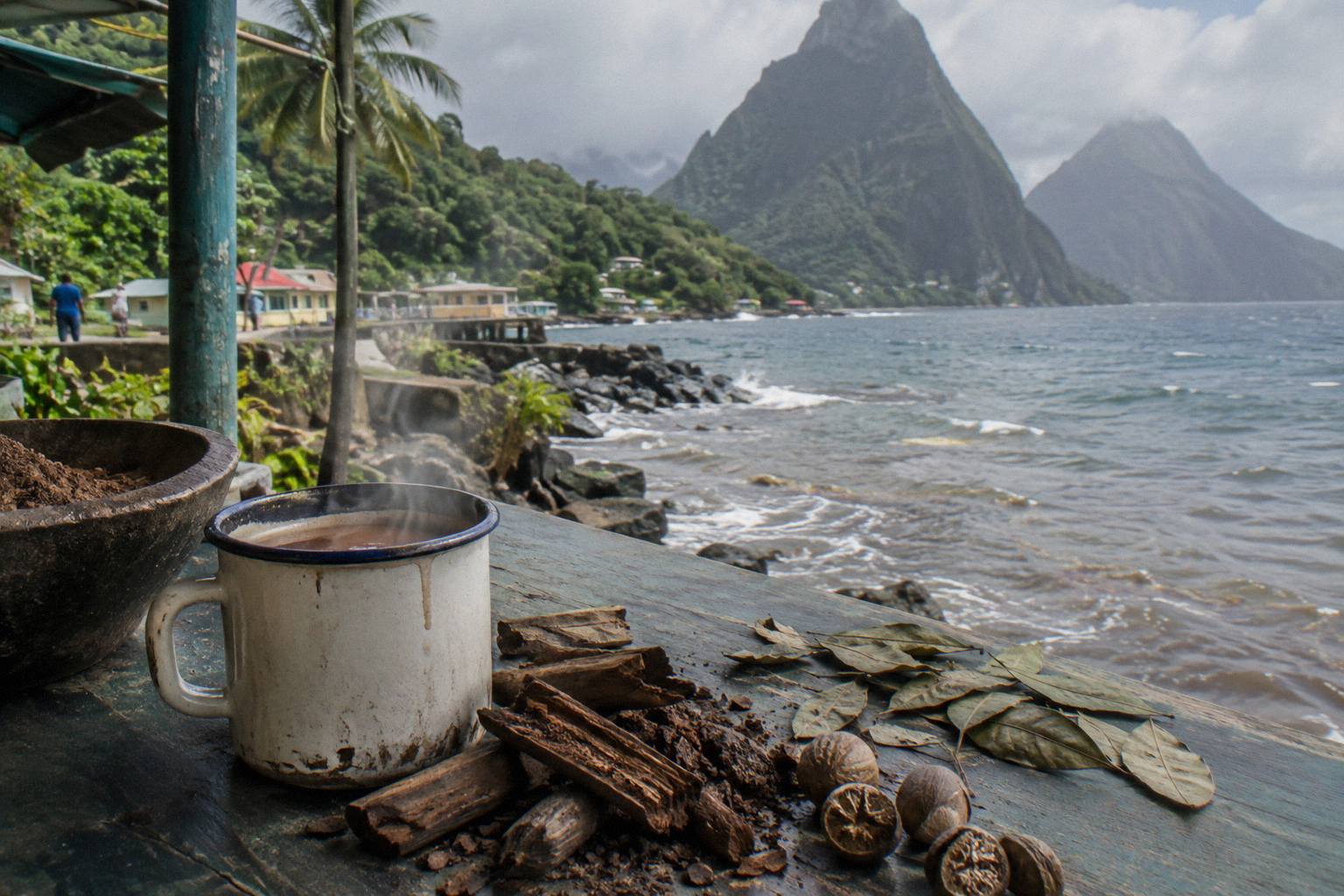
Cocoa tea is a traditional hot drink made by steeping freshly ground cocoa sticks with spices such as nutmeg, cinnamon and bay leaf, and on this island it is a home and market tradition rather than a café order on a menu. Cocoa has been grown on the island since its arrival in the 1660s, so the raw material sits deep in the island's agricultural history, long before anyone bottled or branded it. The drink belongs to the same Creole food culture that produces green fig and saltfish, the national dish of unripe green bananas boiled and served with salt-cured cod. None of that is marketing copy; the FAO documents the cocoa history, and the Saint Lucia tourism culinary page documents the dish.
The spice list matters because it separates cocoa tea from hot chocolate. Nutmeg, cinnamon and bay leaf are aromatics you would recognise from savoury island cooking, and they give the cup a savoury edge. The cocoa itself comes from trees in volcanic soil, part of the same crop the Tourism Authority ties to Soufriere, the town "strongly associated with cacao growing". If your reason for visiting is chocolate in every form, morning is where the tradition lives.
What cocoa tea is not, on this island, is a packaged product. It is something made at home and sold at markets, which is why the morning stalls matter as much as the drink itself. A tasting traveller who wants to understand the cup has to understand where mornings happen, and in Castries that means the Central Market, open since 1891.
How Breakfast Shapes The St Lucian Day
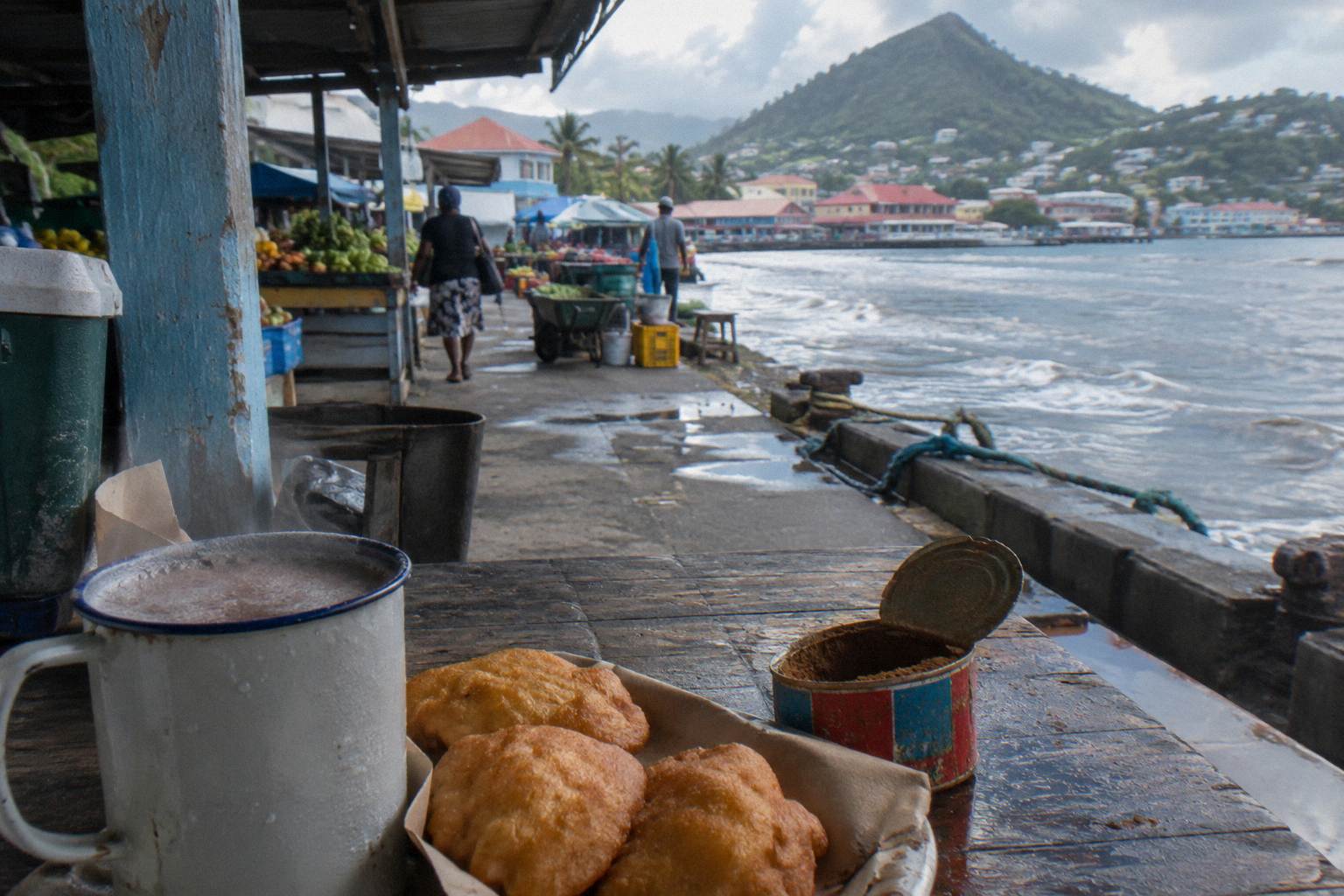
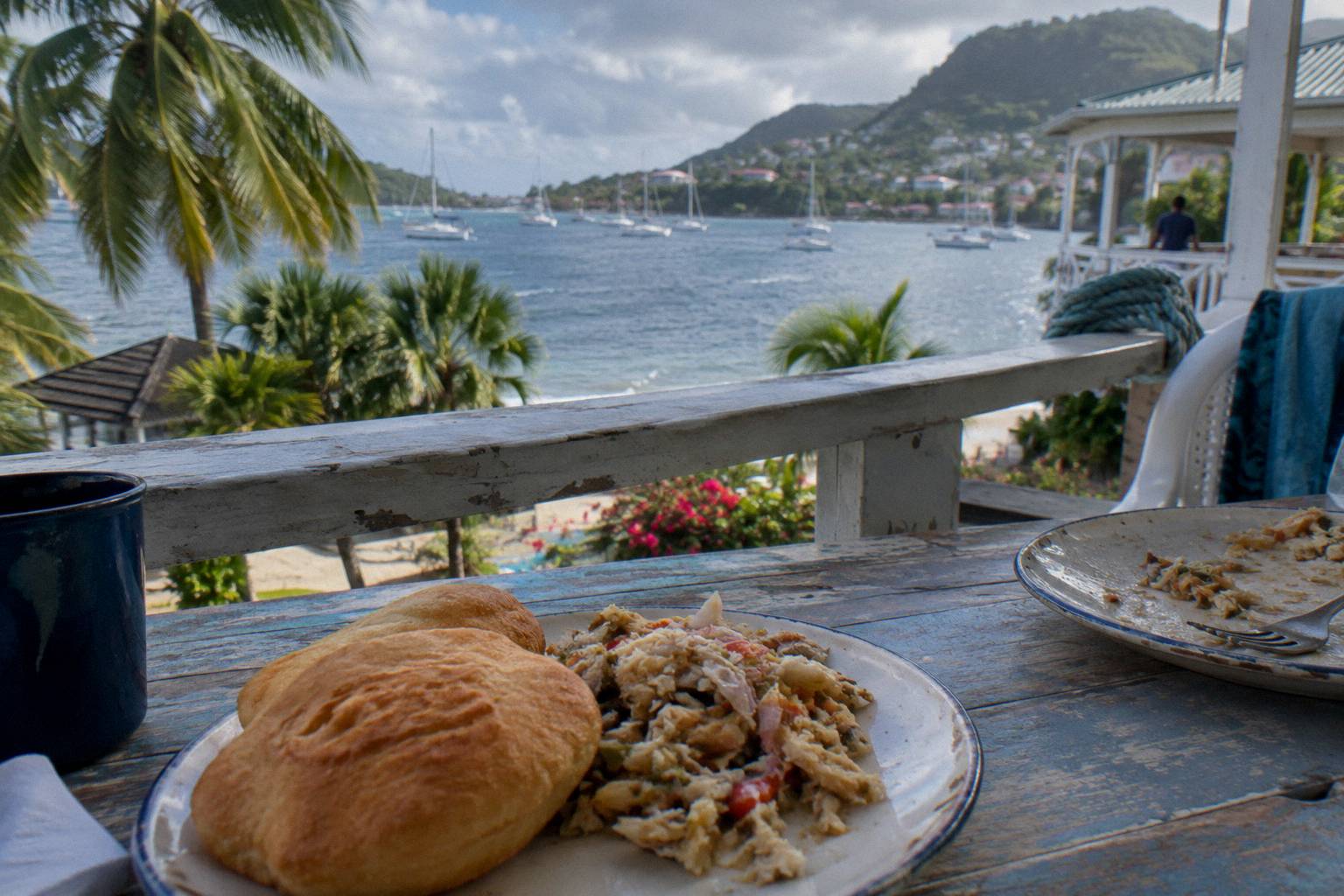
The Tourism Authority describes an island weekend rhythm of Friday night in the fishing villages, Saturday early at the market, then Sunday church, family lunch and the beach, and breakfast sits at the front of two of those three days. Breakfast is not a skipped meal here. Bakes, golden rounds of fried dough known elsewhere as Johnny cakes or floats, are the grab-and-go backbone, paired with saltfish, cheese, jam or smoked herring. Saltfish accra, deep-fried fritters seasoned with herbs, peppers and local spices, appear at markets and roadside vendors from early on.
The rhythm explains why a tasting tour that starts in the morning is not fighting the island's grain, it is riding it. Castries Market breakfast stalls open from around six, and the liveliest day is Saturday, when farmers from all parts of the island come to sell. Arrive early and you are eating with people who live here, before the heat and the cruise crowds. The weekend rhythm blog on the tourism site lays out the full arc.
| Day | The rhythm, per the Tourism Authority |
|---|---|
| Friday | Night in the fishing villages; the Gros Islet street party runs from sunset, well past midnight |
| Saturday | Early at Castries Market, the liveliest day, with farmers from all parts of the island selling |
| Sunday | Church, family lunch and the beach |
| Weekday mornings | Breakfast stalls from around six; bakes and accra at markets and roadside vendors |
Three products on the island fit a breakfast-centred morning, each differently. The "St. Lucia Food and Rum Tour - Taste authentic St. Lucian Food and Culture", or Island Drive, Meals Included, includes a local breakfast and lunch with island-wide pickup, from US$205 per person. The "Castries Market Walking Food Tour by LUCIAN FOOD TOURS" centres the market itself, from US$85 per person. And the "Project Chocolat Tree to Bar Tour at Hotel Chocolat Saint Lucia" covers how cacao grows, from US$130 per person. All amounts are US dollars, per person, and vary by date and group; the booking page shows the price for the date.
For a reader whose anchor is the cup itself, there is one thing to hold plainly in view. No tour line names cocoa tea as an inclusion, so treat the drink as island context and the market as where you are most likely to find it, not as a booked promise. The Saint Lucian street food page is the source for what bakes and accra are and how they are served.
Castries Market At Breakfast Time
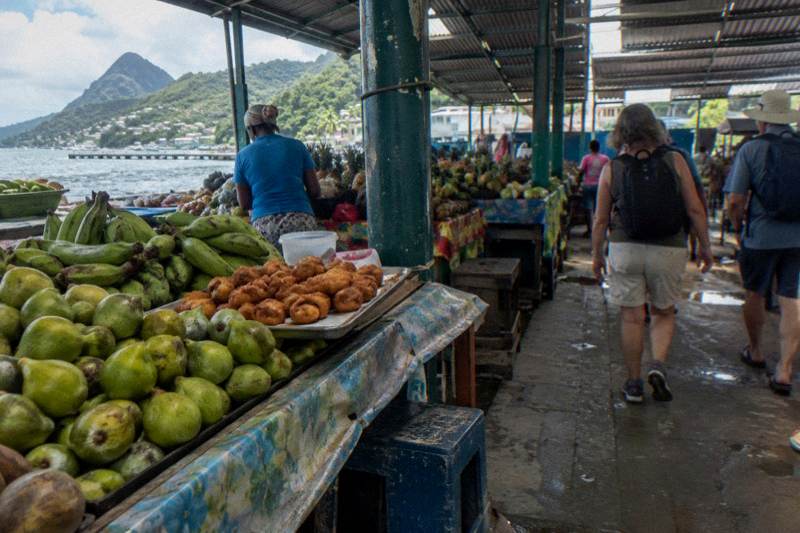
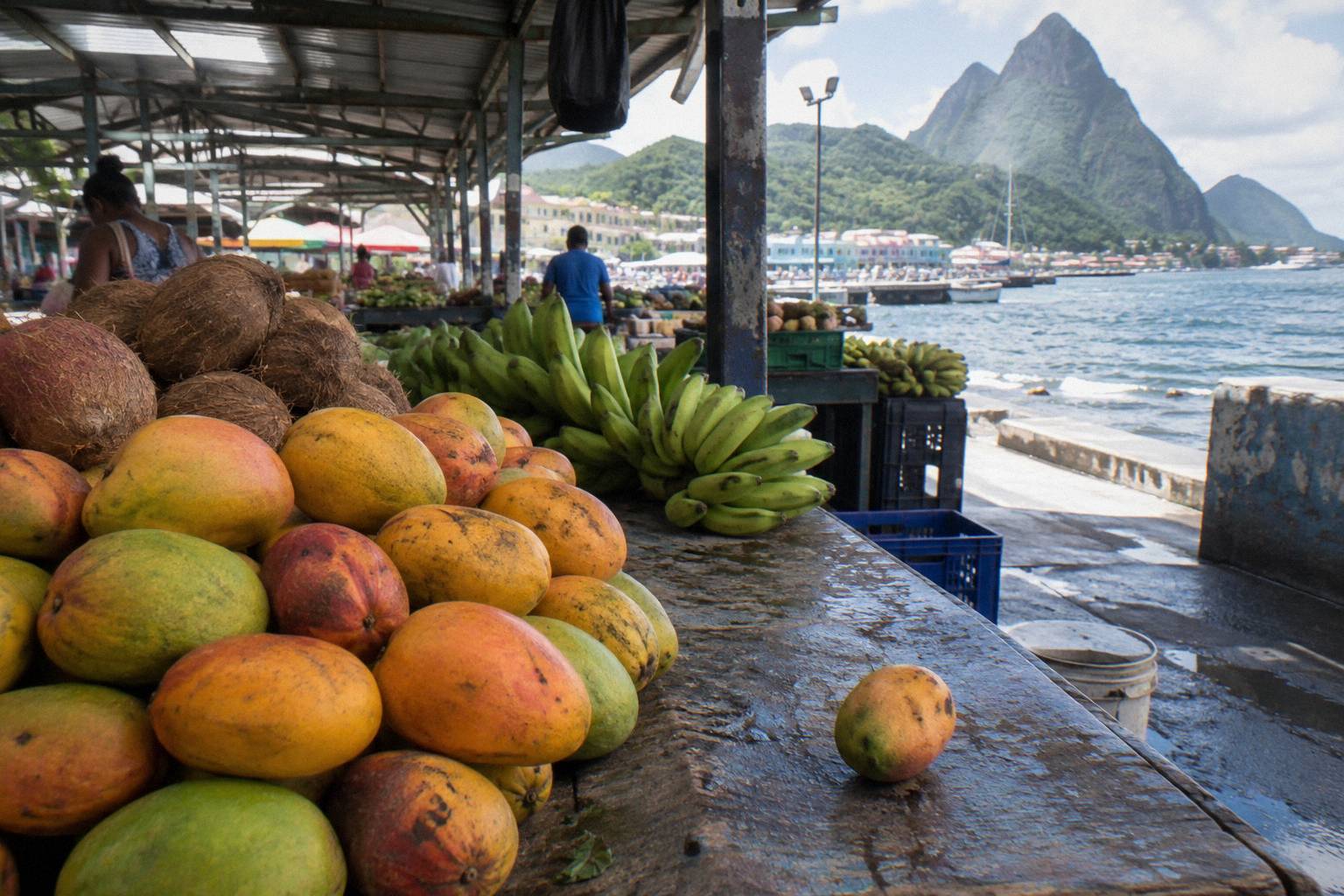
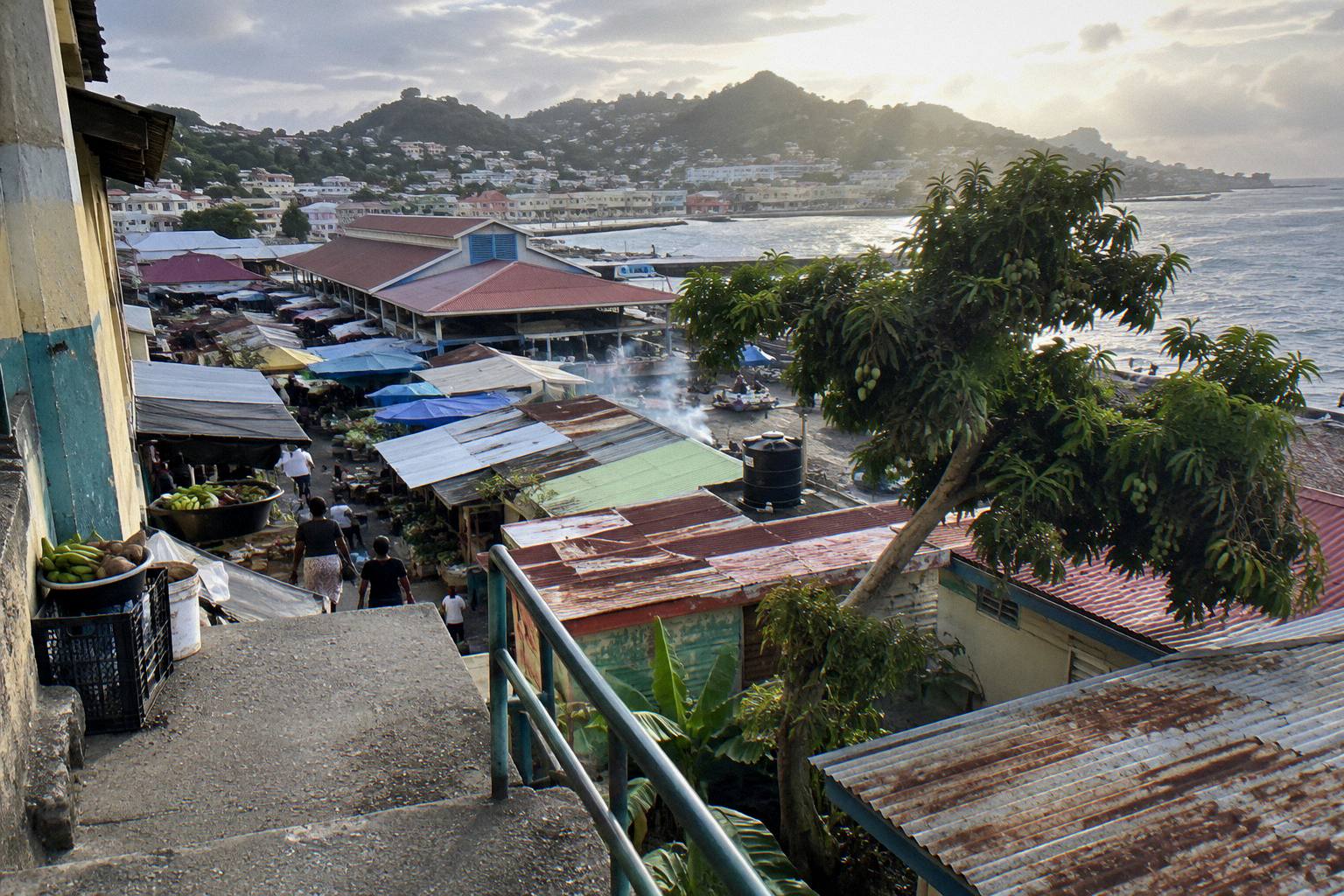
Castries Central Market has operated since 1891, opens every day, and its breakfast stalls run from around six in the morning, with Saturday the busiest day of the week, when farmers from all parts of the island come to sell their produce. The Tourism Authority says National Geographic rated it among the top food markets in the world, and its mango stalls carry over 10 local types, such as Julie, Graham, Starch and Long Mango, with coconuts opened on the spot. Payments run in Eastern Caribbean dollars, most vendors also accept US dollars, and small bills are useful because cash is preferred.
The market is also a working lesson in the island's money system. The Eastern Caribbean dollar is linked at EC$2.70 per US$1, change often comes in EC$, and a market morning is the easiest place on the island to hold both currencies at once. None of that affects tour prices, which are charged in US dollars per person, but it shapes the stall-by-stall experience of breakfast itself. Planning the cash before you leave the hotel is part of planning the morning.
For structure, two products put the market at the centre. The Castries Market, Snacks Included tour from Lucian Food Tours is a 2 hour 30 minute private walk from US$85, rated 4.9 from 33 reviews, including samples of local dishes and local drinks, with a minimum age of 0 and no pickup. The shorter "Food Tour- Taste of St.Lucia", or Shortest Castries Tasting Walk, runs 1 to 1 hour 30 minutes from US$65, rated 4.9 from 21 reviews, with a minimum age of 6. Which one fits depends on whether you want samples built in or a faster pass through the stalls.
A market morning also pairs naturally with the street-food guide to what a Castries market tasting walk covers, which goes stall by stall through the same ground. If you want the market explained rather than merely visited, that comparison does the work.
Which Tasting Tours Include A Local Breakfast
Only one product on the island names a local breakfast in its inclusions: the Island Drive, Meals Included tour from The Other Tour St. Lucia, from US$205 per person, a private 4 to 6 hour day with island-wide pickup and a minimum age of 5. Its inclusion list also covers a local lunch, alcoholic beverages, air-conditioned vehicle, live cashew roasting, local snacks and a friendly guide. It is the one tour where breakfast is not something you arrange around, it is the product itself.
The trade-off is price and duration. At 4 to 6 hours it takes most of a day, and the from-price sits above the market walks. What you buy is reach: free pickup to all locations in St Lucia per its own materials, plus the food, towns, villages and attractions in the same package. It rates 5.0 from 243 reviews, the largest review pool of any food product on the island, and free cancellation applies up to 24 hours before the start.
Around it sit products that cover parts of the morning without the breakfast line. The "Saint Lucia Northern Food Tour", from US$180 per person and 6 to 10 hours private, includes transport but names no meal. The "Rodney Bay Food Tour by LUCIAN FOOD TOURS", from US$74 and rated 5.0 from 110 reviews, runs 2 to 3 hours with five tasting stops and homemade spice rum for guests 18 and older, but it is a Rodney Bay product, not a market-morning one. See the fuller breakdown of what tastings cost in St Lucia before committing.
| Product | From price (US$) | Duration | Breakfast named? | Minimum age |
|---|---|---|---|---|
| Island Drive, Meals Included | 205.13 | 4 to 6 hours | Yes, local breakfast and lunch | 5 |
| Castries Market, Snacks Included | 84.69 | 2 hours 30 minutes | Samples of local dishes | 0 |
| Shortest Castries Tasting Walk | 65 | 1 to 1 hour 30 minutes | Local foods, fruits, juices | 6 |
| Rodney Bay Snack Walk | 73.89 | 2 to 3 hours | 5 tasting stops | 0 |
One line of candor keeps the decision clean: no product on the island promises cocoa tea, and a breakfast inclusion is a menu of local food, not a fixed dish. What is served depends on the day, the vendors and the operator, so treat every inclusion line as the operator's own description of the product rather than a guarantee of any specific plate.
If you want the market breakfast but not the tour price, the timing works in your favour. Castries Central Market opens every day and its breakfast stalls start serving from around six in the morning, which means you can eat before any tour pickup window begins and still use a shorter walking product as the structured part of your morning. Saturday is the busiest day, when farmers from all parts of the island come in to sell, so it is the liveliest morning for a breakfast visit, and the one where arriving early matters most if you want a stall seat rather than a queue.
Two local details are worth carrying into the market with you. The market sells over 10 local mango types, including Julie, Graham, Starch and Long Mango, alongside coconuts opened on the spot, so the fruit portion of any tasting or self-guided breakfast changes with what the farmers bring that day. Cocoa tea, the island tradition made with freshly ground cocoa sticks and spices such as nutmeg, cinnamon and bay leaf, is not listed by any operator, but cocoa has grown on the island since the 1660s and the market has welcomed shoppers since 1891, so the ingredients and the setting around your breakfast are both centuries old even when the plate in front of you was made that morning.
Cocoa On The Island, From The 1660s To Your Cup
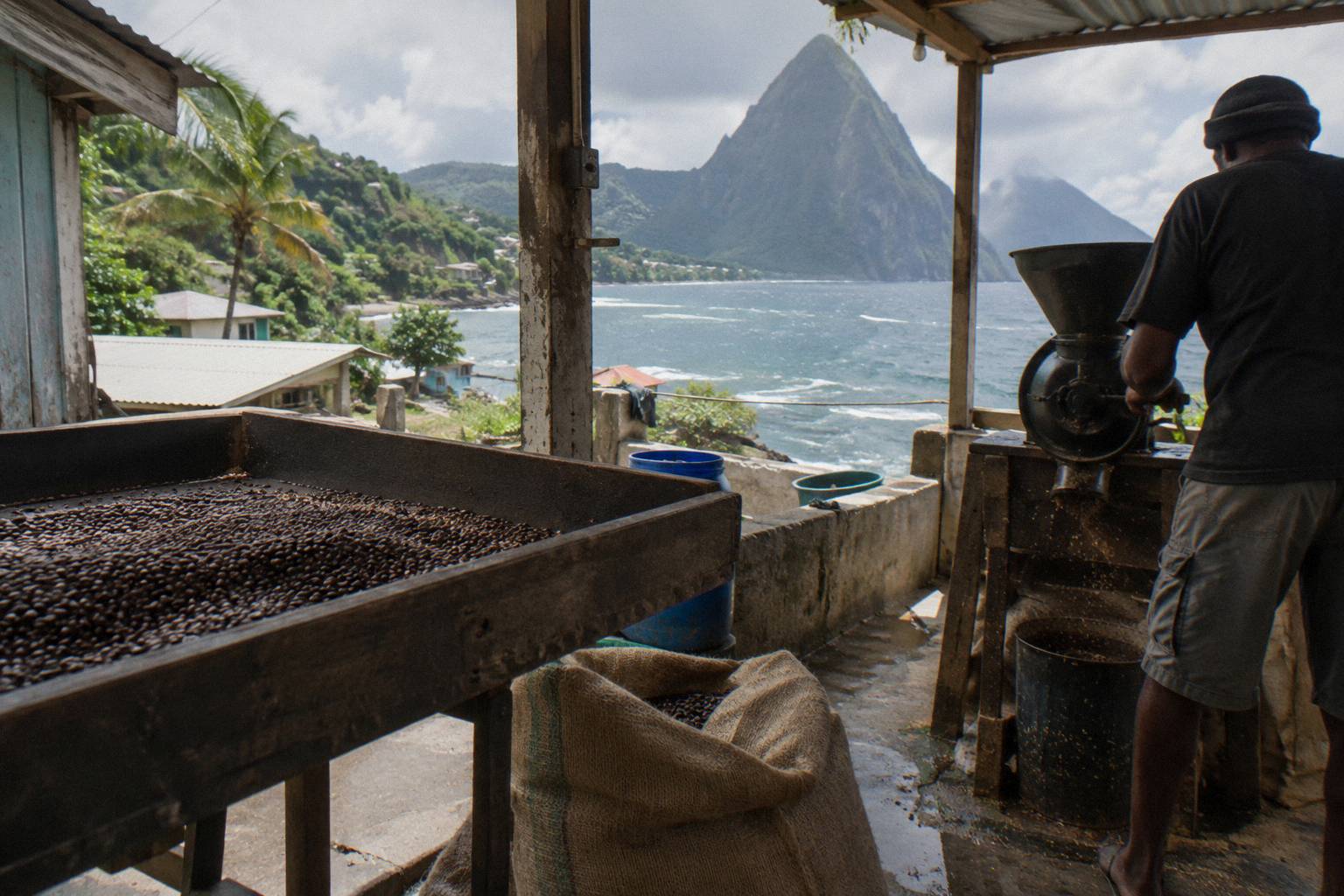
Cocoa has been grown in Saint Lucia since its arrival in the 1660s, per the FAO, and the island's oldest working cacao farm, Rabot Estate in Soufriere, was bought by Hotel Chocolat in 2006; Project Chocolat, a 6-acre area on that estate, is where the Tree to Bar experience covers how cacao grows. That experience walks you through grafting a tree and handcrafting your own chocolate bar, and it is the deepest cocoa product among the island's tastings compared here: 2 to 3 hours, from US$130 per person, rated 4.7 from 587 reviews, shared format, minimum age 8, departing from Rabot Estate in Soufriere with transport excluded.
The connection to breakfast is real but indirect. Cocoa tea is made from ground cocoa sticks, and understanding what a cacao tree produces, and how its beans become anything at all, is the same story told at orchard scale rather than cup scale. The FAO story on cocoa in Saint Lucia frames the drink as an island tradition and the crop as centuries old; the Tree to Bar tour lets you handle the front end of that chain.
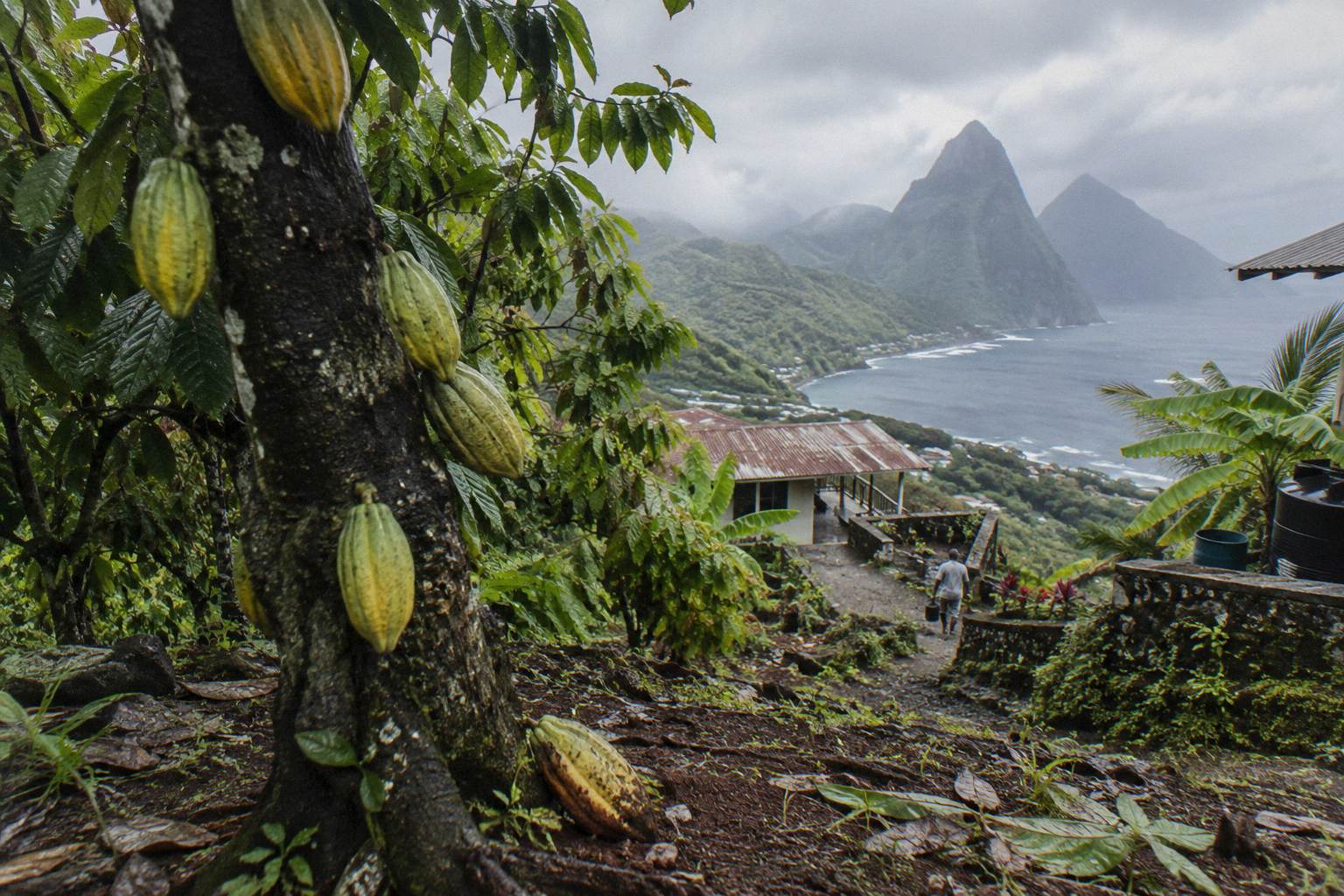
Soufriere alternatives exist for travellers who want cocoa with sights attached. The "Chocolate Making & Soufriere vibes Tour", from US$180 and 3 to 6 hours private, includes pickup and drinks but leaves entrance fees and lunch to you. The "St Lucia Soufriere Private Chocolate Tour", from US$120 and 4 hours private, includes water but no covered entrance fees. The comparison is laid out in the tree to bar chocolate tour guide.
A scheduling note matters more here than anywhere else on the island. Tree to Bar departs from Rabot Estate in Soufriere, and transport is excluded, so a morning cocoa experience and a morning market breakfast are two different ends of the island. Doing both on the same day is possible only with the driving tour that covers meals, or with a very early private arrangement. See dates and check the live price on the booking page before locking a Soufriere morning in high season.
What A Cocoa And Breakfast Morning Costs
A market-centred morning runs from US$65 per person for the shortest Castries walk to US$85 for the market tour with samples included, while a Soufriere cocoa morning runs from US$120 to US$180, and the full breakfast-and-lunch driving day starts at US$205. Those are from-prices, per person, in US dollars; they vary by date and group, and the booking page shows the price for the date. The cheapest morning is not the shortest experience, and the most expensive is the only one that names breakfast.
| Morning shape | Product | From (US$) | Format | Pickup |
|---|---|---|---|---|
| Market and snacks | Castries Market, Snacks Included | 84.69 | Private | Not included |
| Quick market pass | Shortest Castries Tasting Walk | 65 | Private | Optional, extra cost |
| Cocoa experience | Hotel Chocolat Tree To Bar | 130 | Shared | Not included |
| Cocoa with sights | Chocolate Making, Soufriere Sights | 180 | Private | Included |
| Breakfast and lunch day | Island Drive, Meals Included | 205.13 | Private | Island-wide, free |
Beyond the tour price, a market morning costs very little to extend. Stall food is paid in Eastern Caribbean dollars or US dollars with small bills preferred, and tipping is customary at about 10% to 12% of bills, not added automatically. Hotel and restaurant bills carry 10% VAT and a 10% service charge, sometimes already in quoted prices. Tap water is described by the tourism authority as safe to drink, which keeps a long market morning cheap to sustain.
The seasonal angle deserves one paragraph. The busiest, driest season runs December to April, overlapping the October to April main cruise season when up to five ships can call into Castries in a day, so market Saturdays in those months fill early. Hurricane season runs June 1 to November 30. Prices do not move with the calendar on the tours compared, but crowding at the breakfast stalls certainly does, and an early start beats a late ship.
Putting The Morning Together
The cleanest cocoa-and-breakfast morning is a Castries market walk with samples included, from US$85, backed by stalls that open around six and a liveliest day on Saturday; the deepest version is the Tree to Bar tour from US$130 in Soufriere; the most complete is the Island Drive day from US$205 with breakfast and lunch named. Choose by where you are staying and whether transport matters. The market walks carry no pickup; Tree to Bar requires you to reach Soufriere; the driving day collects you anywhere on the island.
Travellers staying in the north have the shortest path to the market, and St Lucia Food Tour keeps the full tasting lineup, including the Rodney Bay options covered in the Rodney Bay walking tasting route, for mornings when Castries feels too far. Cruise passengers face a tighter version of the same choice, since the port's two complexes sit within walking distance of the city but Soufriere does not.
October adds one more reason to time a food morning. Creole Heritage Month runs throughout October and ends with Jounen Kwéyòl, Creole Day, on the last Sunday of the month, when Kwéyòl language, music, madras dress and cassava farine roasting take over the island's food culture. A market morning in that window carries more of the tradition than any other month.
Families should check minimum ages before anything else. The market walks accept all ages, the driving day sets 5, Tree to Bar sets 8, and the shortest Castries walk sets 6. Dietary needs are worth one clause each: ask the operator, since no product line claims vegetarian, vegan or allergen-safe service, and what is served depends on the day.
What Trips People Up Before Breakfast
The three mistakes that most often cost travelers their morning are assuming a tour includes cocoa tea, booking a Soufriere cocoa tour without arranging transport, and arriving at Castries Market after the breakfast stalls have already thinned out. Any one of these can turn a promising food-focused morning into a missed meal. None of the tours compared names cocoa tea, so the drink is something you find at the market or in a home tradition, not something you book. Tree to Bar excludes transportation, and its Soufriere departure point is at the far end of the island from Castries. And the market's breakfast stalls open from around six in the morning, which rewards early risers and punishes late ones who arrive expecting the full spread.
A fourth mistake is trusting a fixed schedule for the evening counterpart. The Anse La Raye fish fry runs on Friday evenings, but ask locally before you go, as the schedule can vary. The Gros Islet Friday street party runs from sunset and well past midnight, and no numeric start or end time is published. Morning planners who want to stack a Friday evening onto a market Saturday should build rest into the plan, not clock times.
The last mistake is money logistics. Arriving at the market with only large US notes works against you when cash is preferred and change comes in EC$. Bring small bills, accept the EC$2.70 per US$1 peg as a fact rather than something to calculate tour prices with, and keep the two currencies separate in your head. The tour is priced in US dollars; the stalls are not.
Common Questions About Morning Flavours
What Is Cocoa Tea In St Lucia?
An island tradition made with freshly ground cocoa sticks and spices such as nutmeg, cinnamon and bay leaf, per the FAO, which also records cocoa growing on the island since its arrival in the 1660s.
Does Any Tour Include Cocoa Tea?
No tour product names cocoa tea in its inclusions. The drink is an island tradition found at markets and in homes; the market walks are the closest booked experiences to that culture.
Which Tasting Tour Includes Breakfast?
The Island Drive, Meals Included tour from The Other Tour St. Lucia includes a local breakfast and lunch, from US$205 per person, with island-wide pickup and a minimum age of 5.
What Time Do Castries Market Breakfast Stalls Open?
From around six in the morning, per the tourism authority. The market is open every day and Saturday is the liveliest, when farmers from all parts of the island come to sell.
What Do St Lucians Eat For Breakfast?
Bakes, golden rounds of fried dough, paired with saltfish, cheese, jam or smoked herring, plus saltfish accra fritters, fresh fruit and, in the island tradition, cocoa tea.
Do I Need Cash For A Market Breakfast?
Yes. Payments run in Eastern Caribbean dollars, most vendors also accept US dollars, cash is preferred and small bills are useful. Tour prices themselves are in US dollars per person.