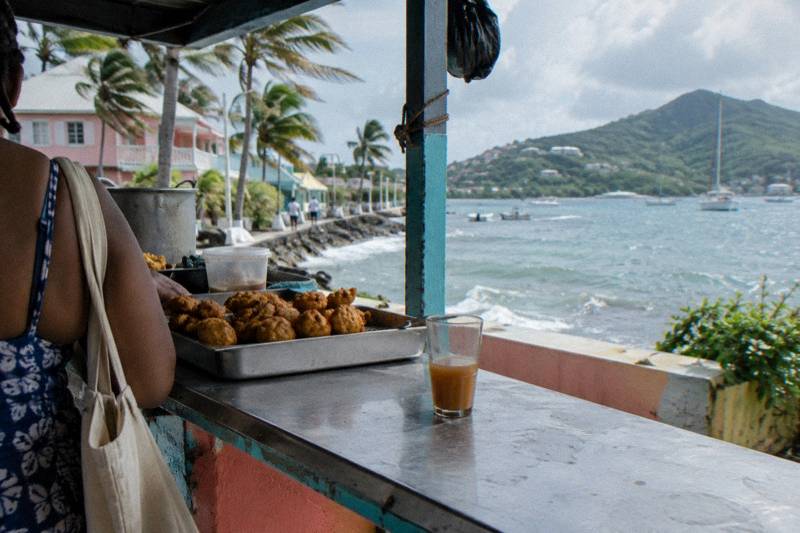
Is It Expensive To Eat Out In St Lucia, Or Is A Tasting Tour Better Value?
Restaurant bill add-ons in St Lucia, from the 10% VAT and 10% service charge to tipping at 10% to 12%, set against tasting tour from-prices that already name what food is included.
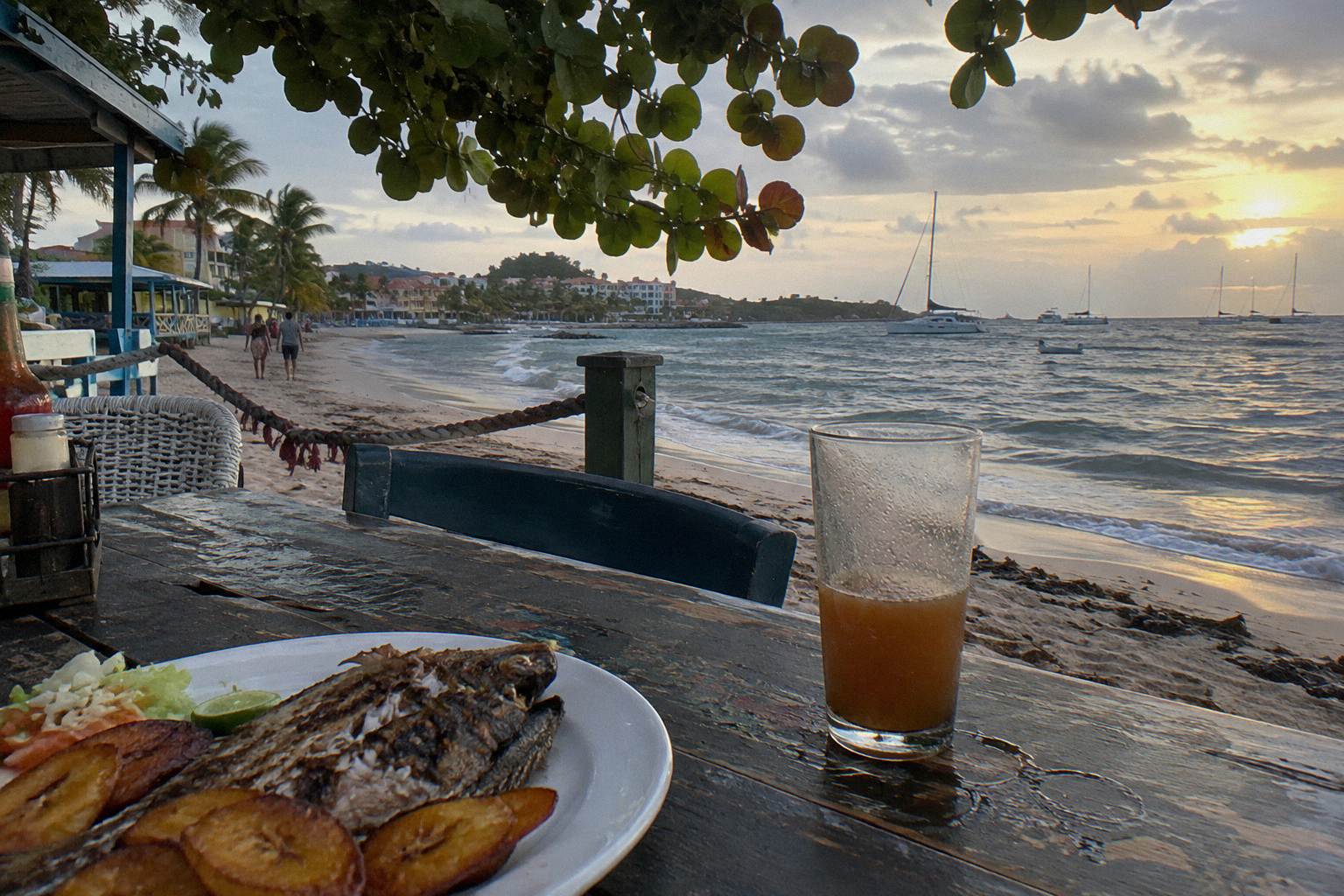
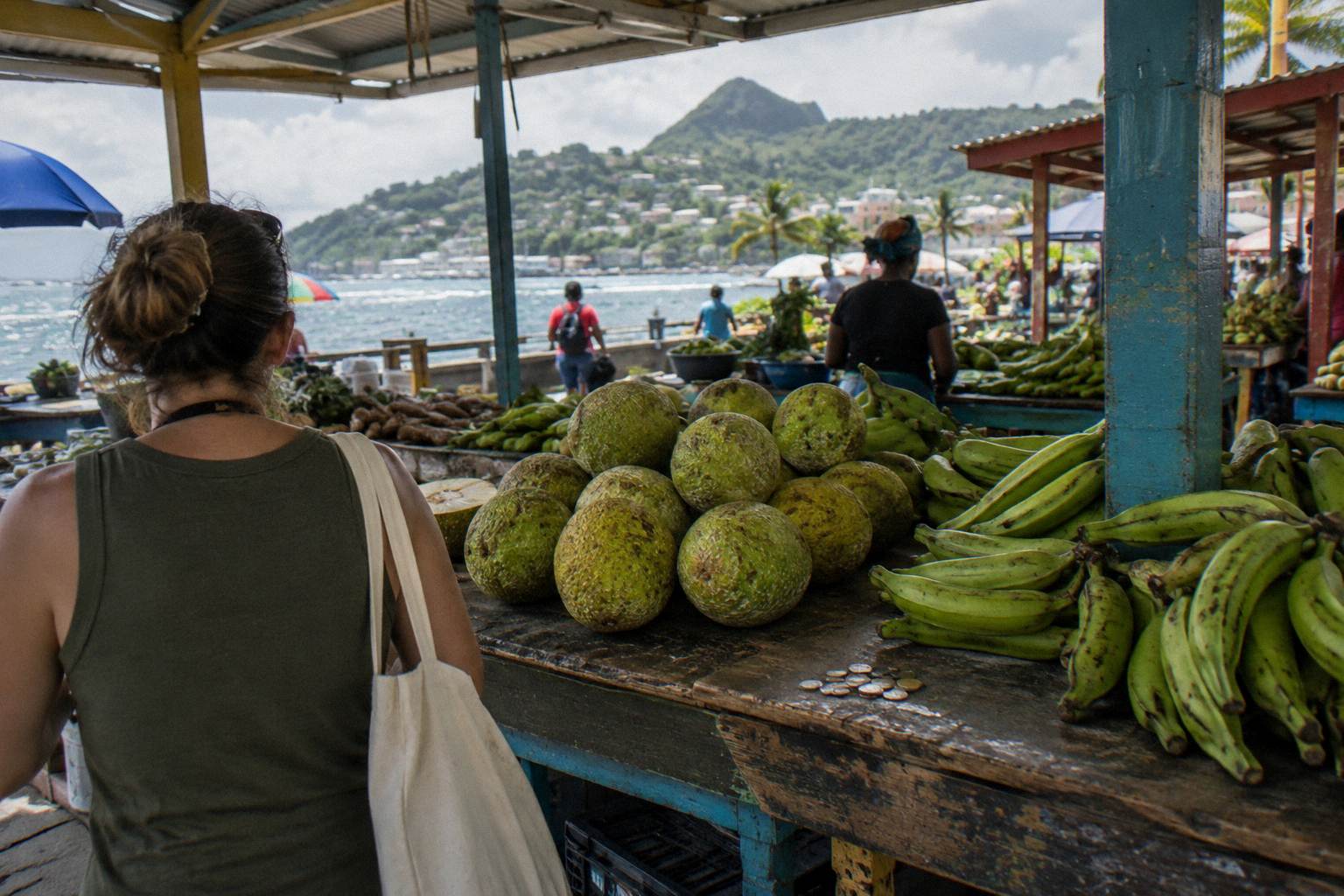
Castries market at the centre of the island's food spending decisions, and every guided tasting walk on the island starts from the same question answered here: where does the food money go?
| Fact | Detail |
|---|---|
| Currency | Eastern Caribbean dollar, linked at EC$2.70 per US$1 |
| US cash | Widely accepted, change often given in EC$ |
| Bill add-ons | 10% VAT and 10% service charge on hotel and restaurant bills |
| Tipping | Not added automatically, customary at about 10% to 12% of bills |
| Tap water | Safe to drink per the Saint Lucia tourism travel tips |
| Cheapest snack walk from-price | US$65 per person, Shortest Castries Tasting Walk |
| Full day with two meals | From US$205 per person, Island Drive, Meals Included |
| Busiest eating-out season | December to April, the driest months |
Yes, eating out in St Lucia can add up quickly, since a restaurant bill carries more than its menu prices once extras are factored in, while several tasting tours fold multiple food stops into a single per-person from-price. For many visitors, that bundled structure makes a tasting tour the better-value way to sample the island's food. Bills carry 10% VAT and a 10% service charge, sometimes already inside the quoted figure, and a tip of about 10% to 12% is customary when it has not been added, which is why two venues can print the same menu number and land different totals. Tours, meanwhile, run from US$65 per person for a short Castries snack walk to US$205 for a full island day with a local breakfast and lunch named as included. Which side is better value depends on how much of your eating you want decided before you arrive.
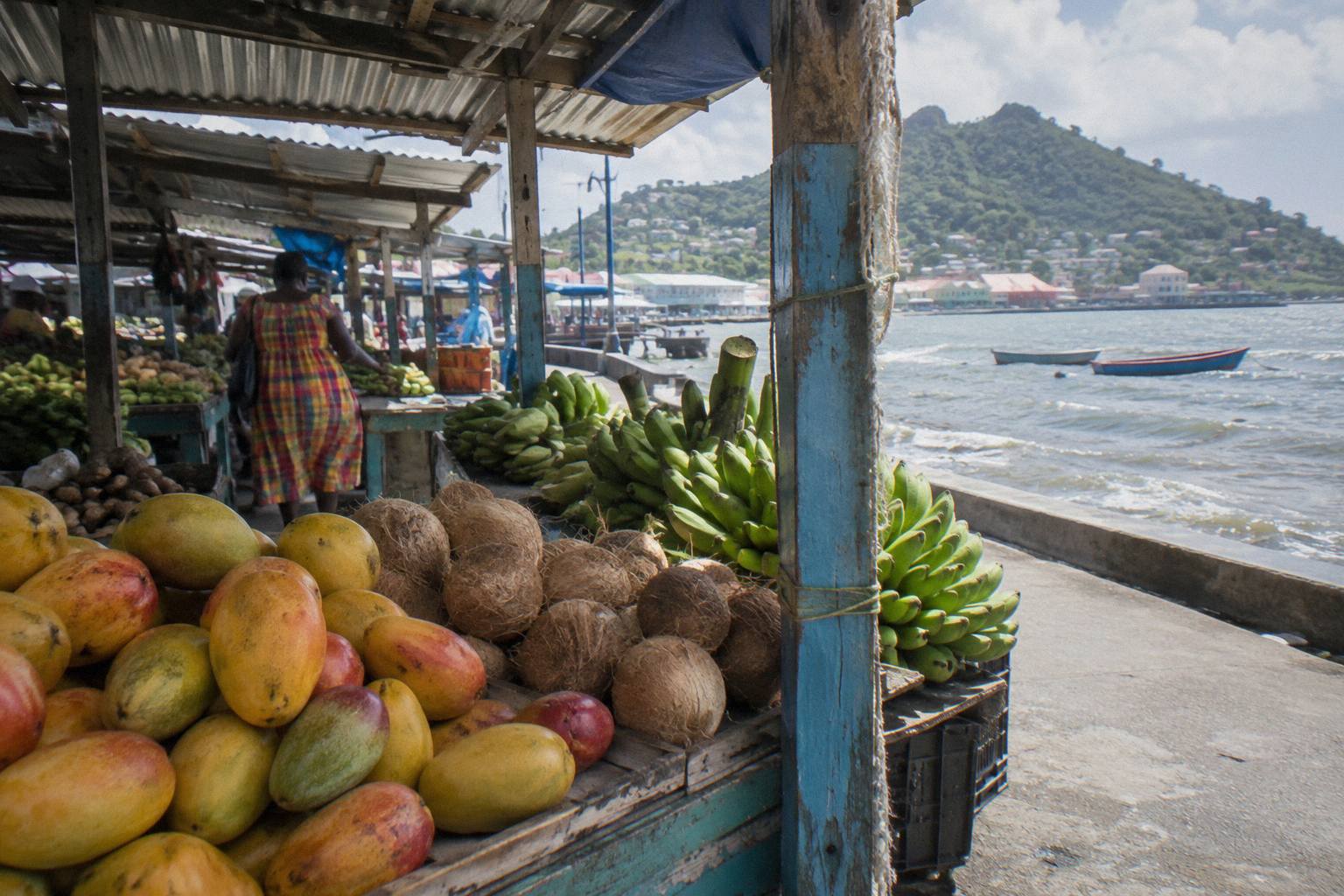
Start with the island's own arithmetic. The Eastern Caribbean dollar is pegged at EC$2.70 to US$1, US notes are widely accepted, and change often comes back in EC$, which is one reason small bills earn their keep at market stalls. The Saint Lucia tourism currency and tipping blog walks through the same practical points, and they matter most exactly where visitors eat: at a restaurant, the menu price is rarely the full number, because tax and service arrive as line items unless the establishment has already folded them in.
That is the piece of the puzzle a first-time visitor usually misses. Two diners can look at the same menu, and one pays a figure close to what is printed while the other pays noticeably more once the add-ons land. It is not a hidden charge in any sinister sense, the rates are published by the tourism authority, but it does mean that comparing a restaurant evening against a tasting tour by menu price alone is a comparison built on the wrong numbers.
A tasting tour flips the structure. The from-price is per person, and on several products the list of what is named as included reads like a small menu: a local breakfast and lunch, or lunch at a cacao estate, or samples of local dishes with drinks. Nothing arrives later except the items each product explicitly names as excluded, such as gratuities or drinks you buy yourself. When St Lucia Food Tour readers ask which side of the ledger wins, the answer usually comes down to how much of the day's food is already spoken for.
Here are the three formats that frame that decision.
What Gets Added To A Restaurant Bill In St Lucia?
A hotel or restaurant bill in St Lucia carries 10% VAT and a 10% service charge, and those two amounts are sometimes already inside the quoted price, so two venues can show the same menu figure and produce different totals. Tipping is not added automatically and the customary rate is about 10% to 12% of the bill, accepted by taxis, tour guides and others. None of these rates apply to a tasting tour's from-price, which already stands as a per-person figure before gratuities.
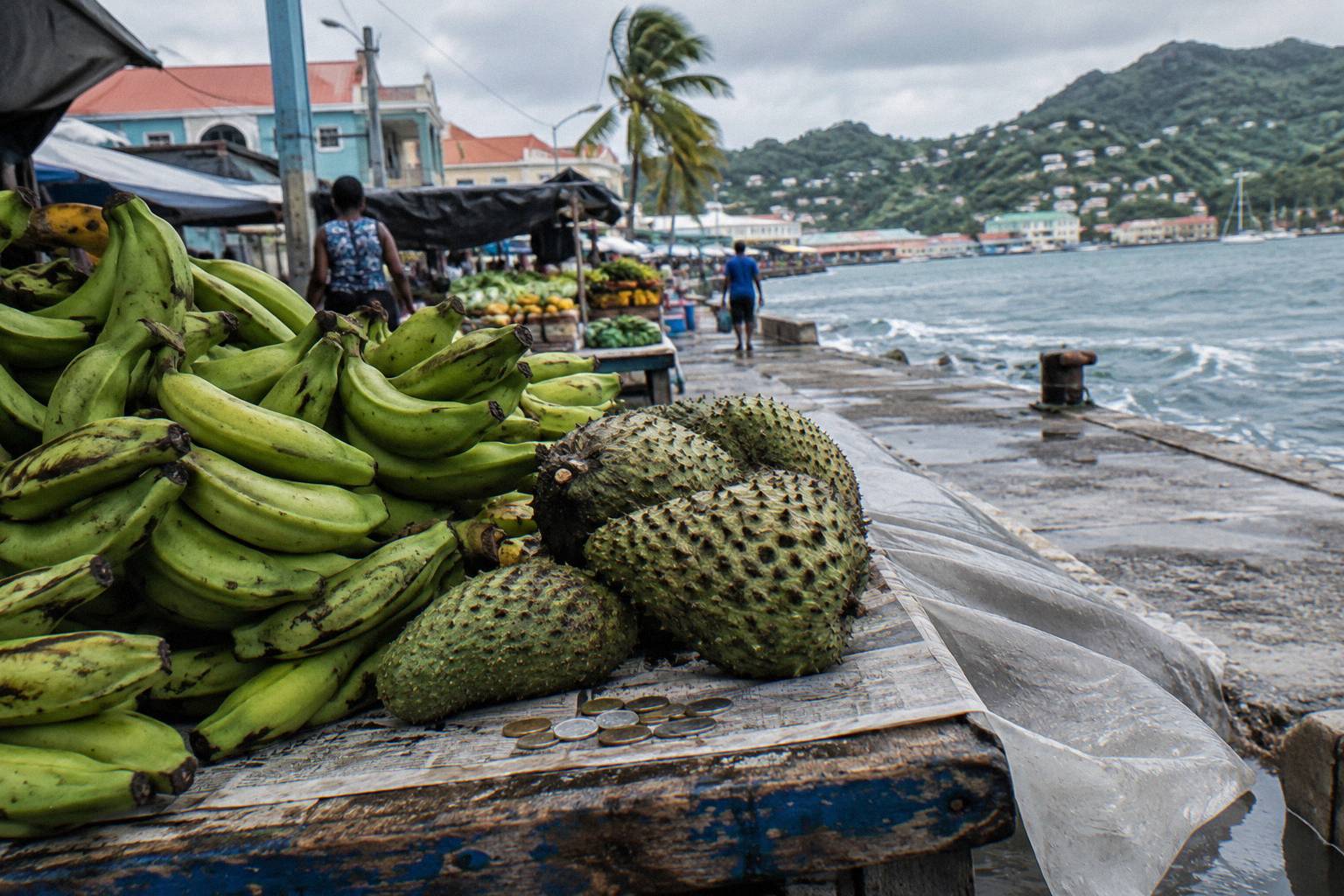
The Saint Lucia tourism travel tips page states the rates plainly, and they deserve a moment of attention because they are the difference between what a menu says and what a card statement says. VAT and the service charge together are a fifth of the pre-add-on total, and since some quoted prices already include them, the only reliable habit is to read the bill before assuming anything. If the service charge is there, a smaller top-up is a judgement call; if it is not, the 10% to 12% custom fills the gap.
| Bill item | Rate or rule | What it means in practice |
|---|---|---|
| VAT | 10% | Added to hotel and restaurant bills |
| Service charge | 10% | Sometimes already in the quoted price |
| Tipping | About 10% to 12% | Not added automatically, customary for taxis, guides and hospitality |
| Currency | EC$2.70 per US$1 | US dollars widely accepted, change often in EC$ |
| Tap water | Safe to drink | No need to budget for bottled water with meals |
Notice what is absent from that table: any promise about what a specific restaurant charges for a specific plate. No sourced per-dish price exists here, and inventing one would be exactly the kind of number that dates badly and misleads worse. What is confirmed is the structure around the food, and the structure alone already tells you a restaurant evening costs more than its menu suggests.
Tours sit differently. A product's from-price is a single per-person number on the booking page, prices vary by date and group, and the named inclusions tell you which parts of the eating are covered. Gratuities are the one add-on the tours compared name on some products, and the same 10% to 12% custom is the guide. If the decision you are circling is a market morning with snacks included, the Castries Market, Snacks Included walk, from US$85 per person for two and a half hours, puts samples of local dishes and local drinks inside the from-price, Check availability and the date you want shows the live figure.
Which Tours Already Name A Meal In The From-Price?
Three of the tours compared name a full meal as included: the Island Drive, Meals Included day from US$205 with a local breakfast and lunch, the Hotel Chocolat Tree To Bar from US$130 with lunch, and the Marigot Bay Cooking, Lunch Included experience from US$120. On these, the from-price buys both the guiding and most of the day's eating, so the restaurant-bill arithmetic shrinks to whatever you eat outside the tour hours.
The Island Drive, Meals Included day is the clearest case. Operated by The Other Tour St. Lucia, from US$205 per person, four to six hours, it names a local breakfast and lunch, local snacks, a live cashew roasting, and alcoholic beverages among the inclusions, with free island-wide pickup. A day built like that replaces two restaurant sittings and a snack stop, which is the whole reason the from-price looks large next to a menu and small next to a full day of separate bills. It is rated 5.0 from 243 reviews.
The Hotel Chocolat Tree To Bar tour, from US$130 per person for two to three hours at the Rabot Estate in Soufriere, names lunch alongside the cacao tour and the chocolate making, with transport excluded and a minimum age of 8. Hotel Chocolat bought the Rabot Estate in 2006, and the Tourism Authority recognises it as the island's oldest working cacao farm; the Project Chocolat page describes the tree-to-bar experience itself. At 4.7 from 587 reviews it is one of the most reviewed food products on the island. Our guide to the tree-to-bar chocolate tour breaks down what the hours hold.
The Marigot Bay Cooking, Lunch Included experience, from US$120 per person for three hours, teaches the cooking and serves the result, which is arguably the most efficient food spend of all: the lesson, the plate and the story arrive as one figure. The deeper background on that format is in what a Marigot Bay cooking tour covers.
| Product | From-price per person | Duration | Food named as included |
|---|---|---|---|
| Island Drive, Meals Included | US$205 | 4 to 6 hours | Local breakfast and lunch, local snacks, cashew roasting |
| Hotel Chocolat Tree To Bar | US$130 | 2 to 3 hours | Lunch |
| Marigot Bay Cooking, Lunch Included | US$120 | 3 hours | Food and drinks, lunch |
| Castries Market, Snacks Included | US$85 | 2 hours 30 minutes | Samples of local dishes, local beverages |
Which Products Are Snack Walks, And Which Leave You Buying Food?
The snack walks, from US$65 to US$95 per person, cover tastings rather than meals, while the Friday Party, Private Driver and Bar Hopping, Meals Extra products name food and drink as purchases you make yourself on the night. On the latter, the from-price buys guiding and transport, and the eating is priced stop by stop, in inexpensive local currency terms, but no sourced per-plate figure exists to print.
The Rodney Bay Snack Walk runs from US$74 per person for two to three hours, rated 5.0 from 110 reviews, with five tasting stops and a homemade spice rum tasting for those 18 and older. The Shortest Castries Tasting Walk, from US$65 per person for one to one and a half hours, samples local foods, fresh fruits and juices. These are meal-adjacent: enough stations that a light appetite is satisfied, not enough that you would skip planning dinner after a long beach day. The planning ranges for what a tasting day costs across the island are laid out in what tastings cost in St Lucia.
At the other end sit the products where food is deliberately outside the price. The Friday Party, Private Driver experience, from US$45 per person for three hours, includes the minivan, the driver-guide, water, text support and a signature rum punch, and names food, beverages and souvenirs as purchases at the event. The Gros Islet Friday Night Street Party has run every week for more than 50 years, from sunset and well past midnight, with grilled chicken, pork and the day's catch served with bakes and green fig salad, per the Saint Lucia tourism Gros Islet page. The Bar Hopping, Meals Extra product, from US$80 per person for four hours, is explicit in its own short name: you pay for drinks and food at the stops, which the operator describes as inexpensive.
| Product | From-price per person | What the price buys | What you buy yourself |
|---|---|---|---|
| Shortest Castries Tasting Walk | US$65 | Samples of local foods, fruits, juices | Nothing food-related named |
| Rodney Bay Snack Walk | US$74 | Five tasting stops, spice rum tasting for 18+ | Private transport |
| Bar Hopping, Meals Extra | US$80 | Guide, transport, bar stops | Drinks and food at the stops |
| Friday Party, Private Driver | US$45 | Minivan, guide, water, rum punch | Food, beverages, souvenirs at the event |
Is A Market Morning The Cheapest Way To Eat Like A Local?
Castries Central Market, open every day since 1891 with breakfast stalls from around six in the morning, is where the island's own food prices live, and payments run in Eastern Caribbean dollars with most vendors also taking US dollars and small bills appreciated. A guided walk through it, from US$85 per person with samples included, converts that market into a morning with a guide, or you can go unguided and pay stall by stall.
The market is the island's food cost benchmark in a way no restaurant is. Over 10 local mango types appear across the year, coconuts are opened on the spot, and Saturday is the busiest day, when farmers from all parts of the island come to sell. The Saint Lucia tourism Castries Market blog covers the payment habits, and the market's own history, open since 1891, is a reminder that this was the food system long before visitors arrived. The Tourism Authority also says National Geographic rated it among the top food markets in the world.
The value question here is not price against price, because no sourced per-item market figure exists to print. It is structure against structure. Unguided, you pay exactly for what you carry away, in EC$ or US$, and you choose stalls on instinct. Guided, the Castries Market, Snacks Included walk puts samples of local dishes and your guide's explanations in the from-price, rated 4.9 from 33 reviews. The trade is a known figure for an unknown one, and for a first morning on the island that is often a fair trade.
What the market also does is calibrate the rest of the day. Once you have watched a vendor describe breadfruit, "a sweet, potato-like staple" in the tourism authority's words, and green fig, the unripe banana behind the national dish, the same plates on a restaurant menu read differently. You know roughly what the raw material costs in the place it is sold, even without printing a figure, and you know the cooking, the setting and the service are what a restaurant bill is really charging for.
Does The Season Change The Value Calculation?
The driest and busiest months, December to April, coincide with the main cruise season from October to April, when up to five ships can call at Castries in one day, and demand is what tightens both restaurant seating and tour availability. Average temperatures sit between 23 and 31 C year round, the rainy season runs June to December with usually brief showers, and the Atlantic hurricane season spans June 1 to November 30.
None of that changes the VAT or the tip custom, which hold year round. What changes is availability and crowding. The Castries cruise port operates two complexes, Pointe Seraphine and La Place Carenage, with water taxis between them, per the Saint Lucia ports authority cruise page, and cruise passengers walking into Castries on a busy call add a wave of same-day demand to the market and the streets around it. A from-price on a tasting tour holds per person regardless, but dates in the peak weeks fill first, which is the practical argument for checking dates early rather than pricing early.
The Friday-night products illustrate the seasonal point best. The street party runs from sunset every Friday, and a private driver format from US$45 per person buys the round trip and orientation while food money stays in your pocket at the stalls. In the off-season months the same from-price applies with thinner crowds, and in the peak it applies with a full street; the price structure does not move, the experience around it does. Creole Heritage Month throughout October, ending with Jounen Kweyol on the last Sunday, is the one stretch where the whole island's food calendar peaks at once, and where booking ahead matters most for anything food-related.
Money habits hold steady across seasons too. The EC$2.70 peg does not move, US cash works island-wide, and the tap water is described by the tourism authority as safe to drink, which quietly removes a daily bottled-water line from any budget. The genuine seasonal variables are seats and slots, not rates.
What Trips People Up Before You Book?
The avoidable mistakes are comparing a menu price to a tour from-price without the bill add-ons, assuming food is included when the product names it as excluded, and forgetting that every tour price here is per person and varies by date and group, with the booking page showing the figure for the day you want. Get those three straight and the expensive-versus-value question answers itself for your own itinerary.
The first trap is the false comparison. A menu says one number and the bill says another, because of the two 10% charges and the tip custom, while a tour from-price is closer to a final per-person figure once you add only what the product names as excluded, usually gratuities and occasionally an entrance fee. Comparing raw menu figures to raw from-prices flatters the restaurant side of the ledger every time.
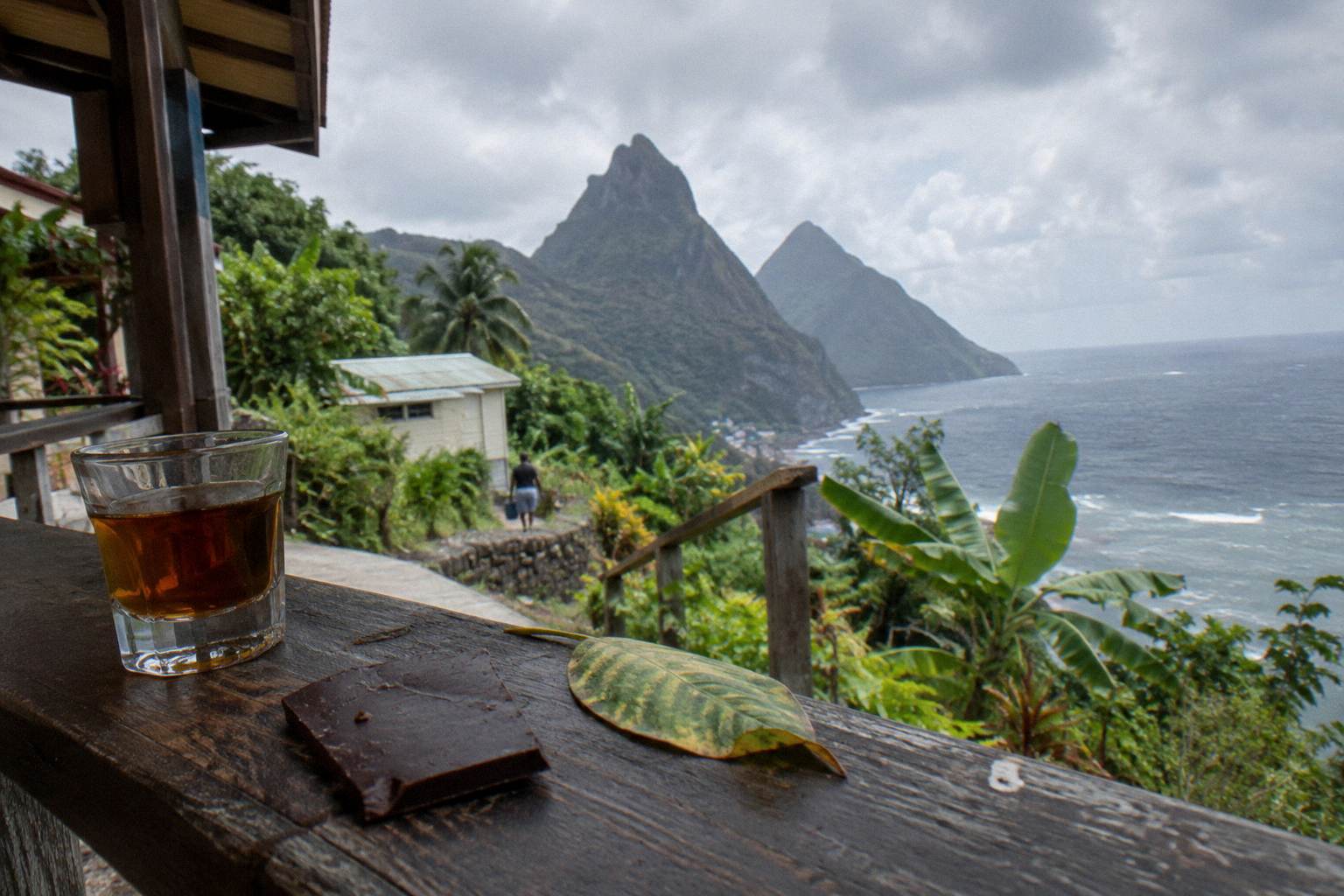
The second trap is inclusion drift. Read the named inclusions for the specific product. The Island Drive day names two meals; the Friday Party names food as your own purchase; the Rum Plus Chocolate Combo names transport and water but leaves food off the list entirely. These are not fine-print differences, they are the difference between a food budget and a transport budget, and each product's own booking page carries the wording for its dates.
The third trap is the per-group and per-date assumption. Every figure is per person, prices vary by date and group, and no clock times or per-group totals exist to print. If a family of four is planning, the arithmetic is four times a per-person from-price plus whatever the product excludes, not a quoted group sum. Ask the operator where a detail matters and the tastings compared here do not answer it.
A fourth, smaller trap: the distillery rule. St. Lucia Distillers' own visitor tour admits individuals Monday to Friday, first tour 9:00 am and last 3:00 pm, and only adults 18 and older may taste. The rum tours compared here carry their own minimum ages, 18 on the Distillery Rum Tour and the Rum Tour and Chocolate Making day. Planning a tasting day around a teenager or a non-drinker is a matter of reading the age line on each product before the money question even arises.
Common Questions About Eating Costs And Tasting Tours In St Lucia
Is It Expensive To Eat Out In St Lucia, Or Is A Tasting Tour Better Value?
Restaurant bills carry 10% VAT and a 10% service charge, sometimes already quoted, plus a customary 10% to 12% tip. Tasting tours from US$65 per person for snack walks to US$205 for a full day with two meals name their food in the from-price, so the better value depends on how much eating you want pre-decided.
How Much Should I Tip On A Restaurant Bill In St Lucia?
Tipping is not added automatically and the customary rate is about 10% to 12% of the bill, the same custom that applies to taxis and tour guides. Read the bill first, because some quoted prices already include the service charge.
Can I Use US Dollars At Market Stalls And Restaurants?
Yes. US currency is widely accepted, the Eastern Caribbean dollar is pegged at EC$2.70 per US$1, and change often comes back in EC$. Small bills are useful at Castries Market, where cash is preferred and most vendors also take US dollars.
Which Tasting Tours Include A Full Meal?
The Island Drive, Meals Included day from US$205 names a local breakfast and lunch, the Hotel Chocolat Tree To Bar from US$130 names lunch, and the Marigot Bay Cooking, Lunch Included experience from US$120 serves the food you cook.
Do Any Food Tours Leave You Paying For Food Separately?
Yes. The Friday Party, Private Driver product from US$45 includes the driver, water and a rum punch, with food and drinks purchased at the event, and Bar Hopping, Meals Extra from US$80 names drinks and food at the stops as your own purchases.
Does The Time Of Year Change Food Prices?
The tax, service charge and tipping rates hold year round and the EC dollar peg does not move. What changes seasonally is demand: December to April is busiest, cruise season runs October to April with up to five ships a day calling at Castries, and October's Creole Heritage Month is the peak of the island's food calendar.