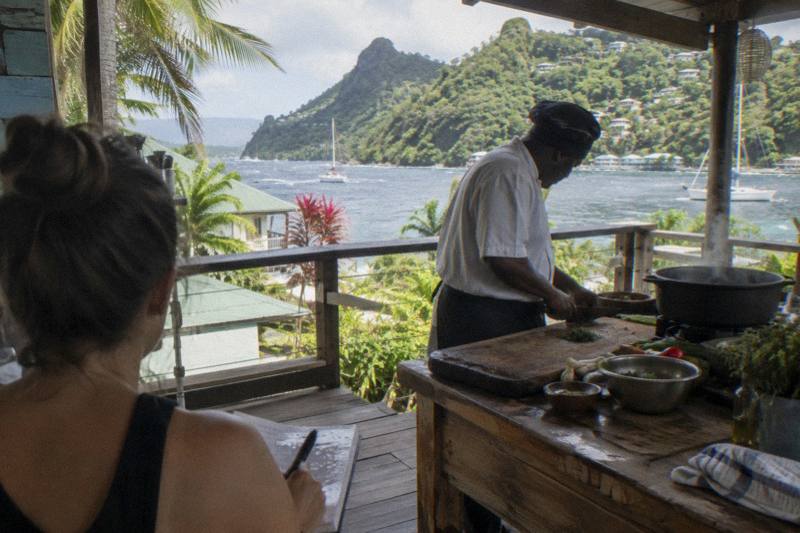
Cooking Class Options In St Lucia: Hands-On Or Demo
The booking decision on a St Lucia cooking class is format: a hands-on class where you cook, or a demonstration where a chef cooks and you eat.
Short answer
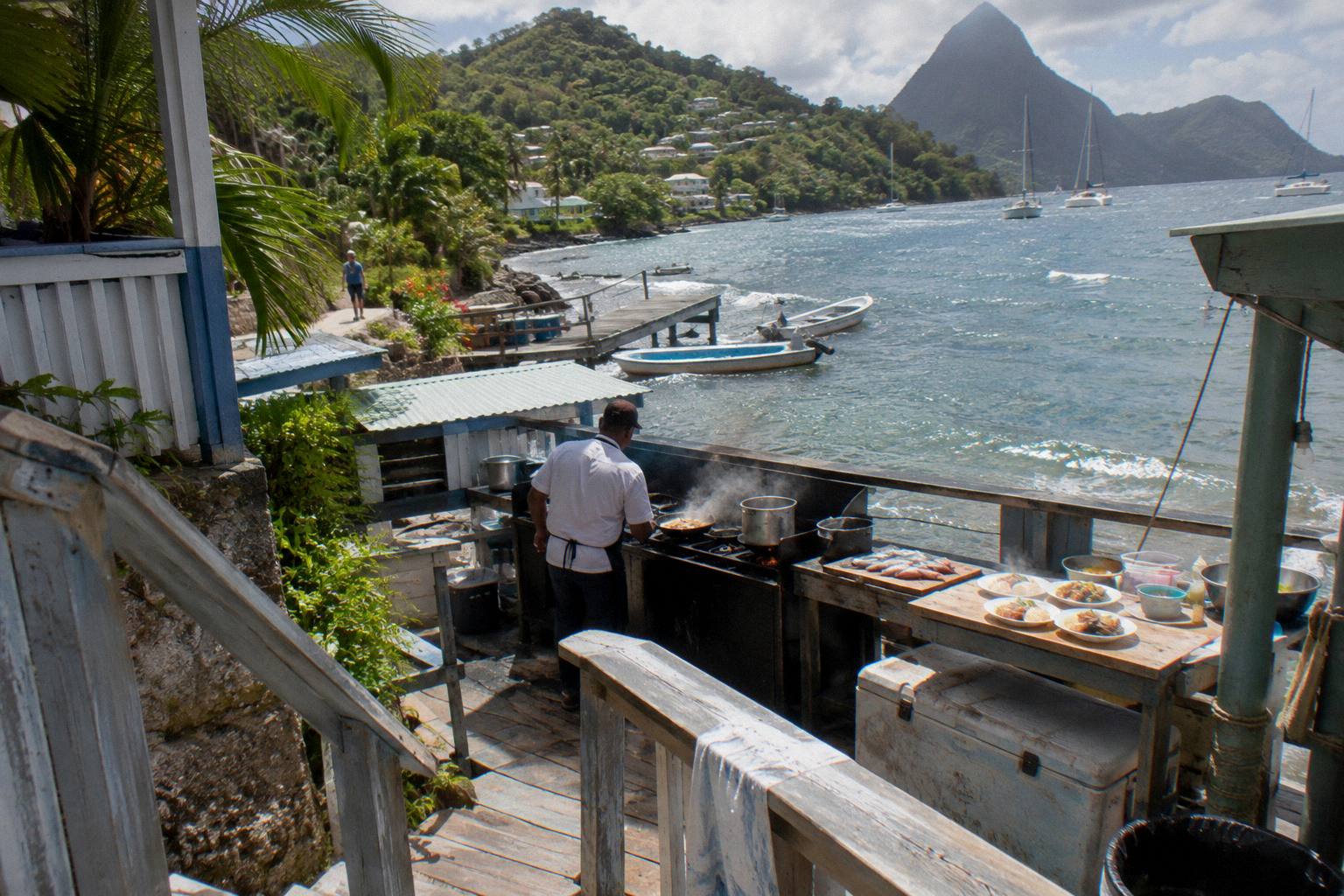
St Lucia cooking options split into hands-on cooking and chef demonstrations. The Flavors of St Lucia Culinary Experience runs 3 hours from US$130 with a professional chef, food and drinks, and hotel or port pickup in the north. The Marigot Bay cooking tour runs 3 hours from US$120 with lunch included. Marigot Bay is the hands-on option and the Flavors experience is the chef demonstration.
Cooking sits near the centre of Saint Lucian food culture, and the cooking classes and culinary days hub gathers the bookable products built around it. The real decision before booking is format: whether you want to stand at a stove yourself or watch a professional chef demonstrate, then sit down to what was cooked. What follows works through that choice using what each product's own booking line states, and it layers in the market, money and calendar facts that decide whether a cooking day actually works for your group.
| Fact | Detail |
|---|---|
| National dish | Green fig and saltfish, unripe green bananas with salt-cured cod, usually with fried plantains, callaloo soup or breadfruit |
| What classes teach | Green fig and saltfish, callaloo soup, fried plantains, fresh-caught fish and local cocoa desserts, per the Saint Lucia Tourism Authority |
| Where classes run | Some in private homes, boutique hotels or beachfront restaurants; many begin with a market or garden visit |
| Chef demonstration | Flavors of St Lucia Culinary Experience, from US$130 per person, 3 hours, minimum age 2 |
| Marigot Bay cooking tour | Saint Lucian Cooking Tour at Marigot Bay, from US$120 per person, 3 hours, minimum age 18 |
| Currency | Eastern Caribbean dollar pegged at EC$2.70 per US$1; US dollars widely accepted |
| Cancellation | Both cooking products allow free cancellation up to 24 hours before the start |
What A St Lucia Cooking Class Actually Teaches
A Saint Lucian cooking class teaches Creole home cooking rather than restaurant technique, and the Tourism Authority is specific about the repertoire it expects classes to cover. Rather than plating skills or professional methods, you learn everyday island dishes, local ingredients, and the family-style traditions behind them, giving you practical recipes and techniques you can realistically recreate at home long after the class ends. The Authority's Creole cooking classes page names green fig and saltfish, callaloo soup, fried plantains, fresh-caught fish and local cocoa desserts as the core dishes. Many classes open with a market or garden visit so the ingredients arrive with context, and some run in private homes, boutique hotels or beachfront restaurants. That range of settings is part of the appeal: the same national repertoire appears in a home kitchen and on a waterfront terrace, and the setting changes the pace of the day more than it changes the menu.
The cuisine behind those dishes is what the Saint Lucia tourism culinary page describes as a Creole blend of African, French and Caribbean influences, built on fresh seafood, tropical produce, spices and cacao grown in volcanic soil. The national dish anchors most menus. Green fig and saltfish pairs unripe green bananas, boiled, with salt-cured cod cooked in herbs and spices, and it usually arrives with fried plantains, callaloo soup or breadfruit, which the Authority calls a sweet, potato-like staple. A class that teaches this dish teaches the island's central plate, and most visitors name it as the thing they want to learn before anything else.
Cocoa desserts belong to a longer story. The FAO records that cocoa has been grown on the island since its arrival in the 1660s, and cocoa tea, made with freshly ground cocoa sticks and spices such as nutmeg, cinnamon and bay leaf, remains an island tradition. A cooking day that ends with a local cocoa dessert connects to that lineage in a way few Caribbean islands can match, since the tree is a crop with nearly four centuries of local history. For the broader picture of the island's dishes, the saint Lucian dishes a tasting walk covers guide lists what food tours sample, and the green fig and saltfish national dish explained guide unpacks the national dish in full.
| Dish The Authority Names | How The Tourism Authority Describes It |
|---|---|
| Green fig and saltfish | Unripe green bananas boiled and served with salt-cured cod, cooked with herbs and spices, usually with fried plantains, callaloo soup or breadfruit |
| Callaloo soup | Named as a usual accompaniment to the national dish and a class dish |
| Fried plantains | Named as both a side to the national dish and a dish classes teach |
| Fresh-caught fish | Named among the dishes Creole cooking classes teach |
| Local cocoa desserts | Named among the dishes Creole cooking classes teach, tied to island cocoa tradition |
Hands-On Or Demonstration: Which Format Suits You
The format split is the whole decision: a hands-on class has you at the cutting board and the stove, while a demonstration has a professional chef cooking in front of you with the meal served afterwards, and the two experiences teach different things. The Flavors of St Lucia Culinary Experience states its format plainly: a professional chef, a cooking demonstration, food and drinks, and hotel and port pickup. It is a demonstration by its own line, and the distinction matters for what you take home. A demonstration teaches by watching and eating; a hands-on class teaches by doing, and the muscle memory of a dish is different from the memory of watching one being made.
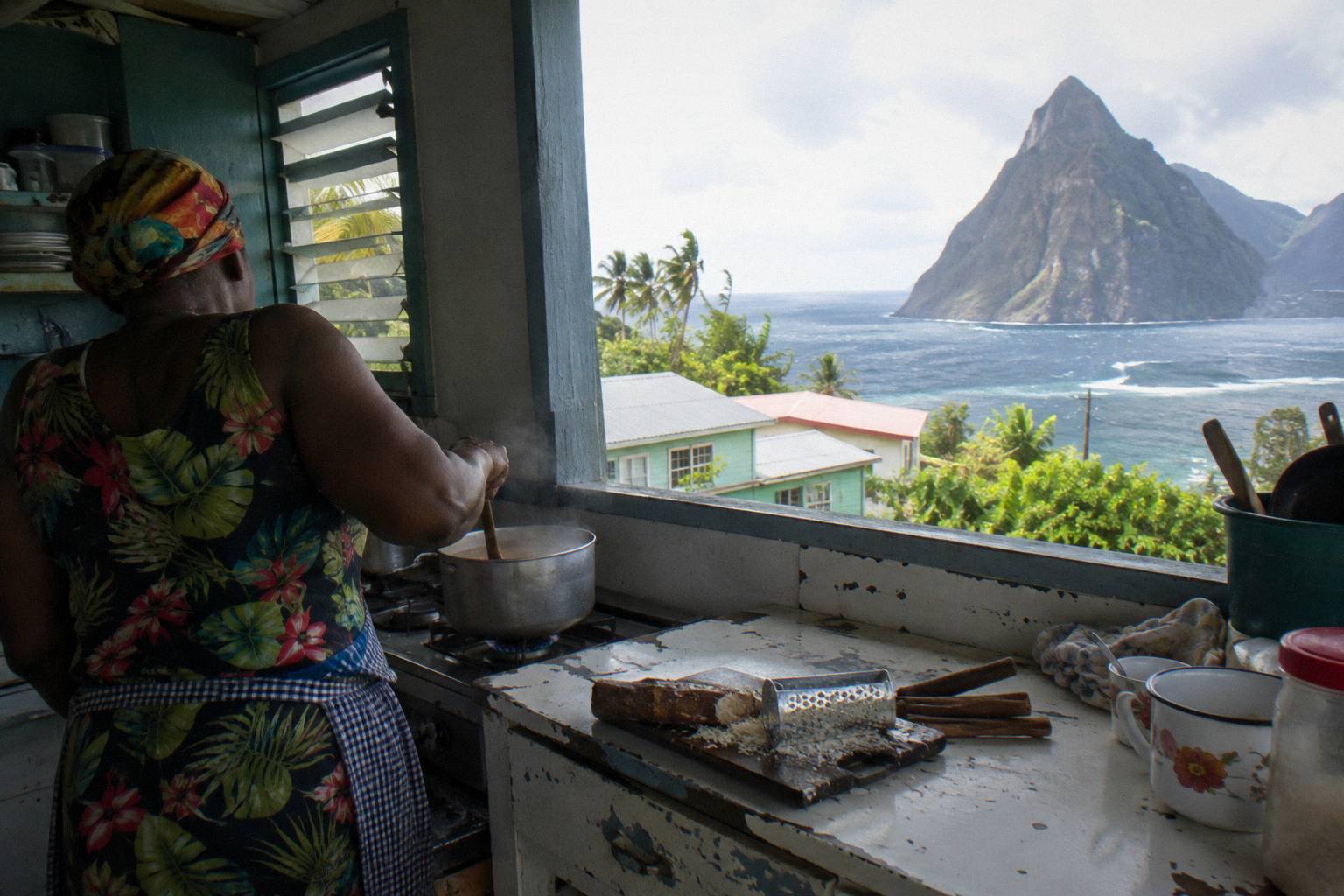
Only the products' own lines can tell you which is which, and here they do. The Saint Lucian Cooking Tour at Marigot Bay is described as a hands-on cooking tour where guests prepare their lunch with a local chef, alongside bottled water and an air-conditioned vehicle. The Flavors of St Lucia Culinary Experience is the chef demonstration. If the exact split of cooking and watching on your date matters, one short question to the operator settles it before the free-cancellation window closes.
Format also changes the day's rhythm. A demonstration suits visitors who want the meal, the story and a seated experience, and it suits anyone with limited mobility or limited patience for prep work. A hands-on session suits travellers who cook at home and want to reproduce green fig and saltfish in their own kitchens, which is a stated draw of Creole classes generally. Money behaves the same either way: all amounts are in US dollars, the Eastern Caribbean dollar sits at EC$2.70 per US$1, and prices vary by date and group, with the booking page showing the price for the date you choose.
A third path blends the two. The St. Lucia Food and Rum Tour by The Other Tour St. Lucia is not a class, but it covers local breakfast, lunch, snacks and a live cashew roasting across 4 to 6 hours, from US$205 per person with island-wide pickup, rated 5.0 from 243 reviews. Travellers who want cooking plus a full island food day sometimes pair a demonstration with something like this, letting the class carry the technique and the drive carry the breadth. Check the live price for your dates before deciding, since group size and season move the figure in both directions.
The Two Cooking Products Compared
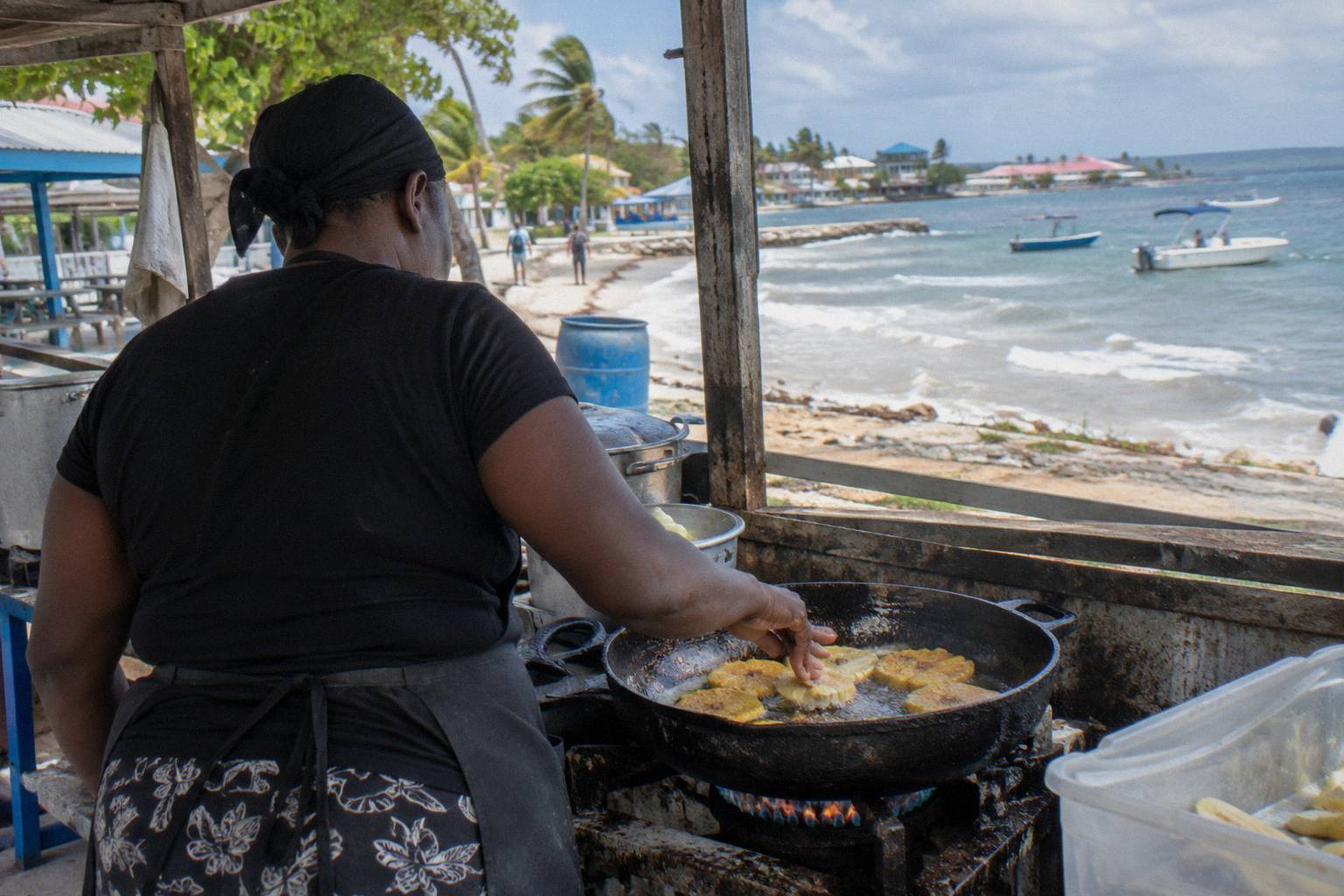
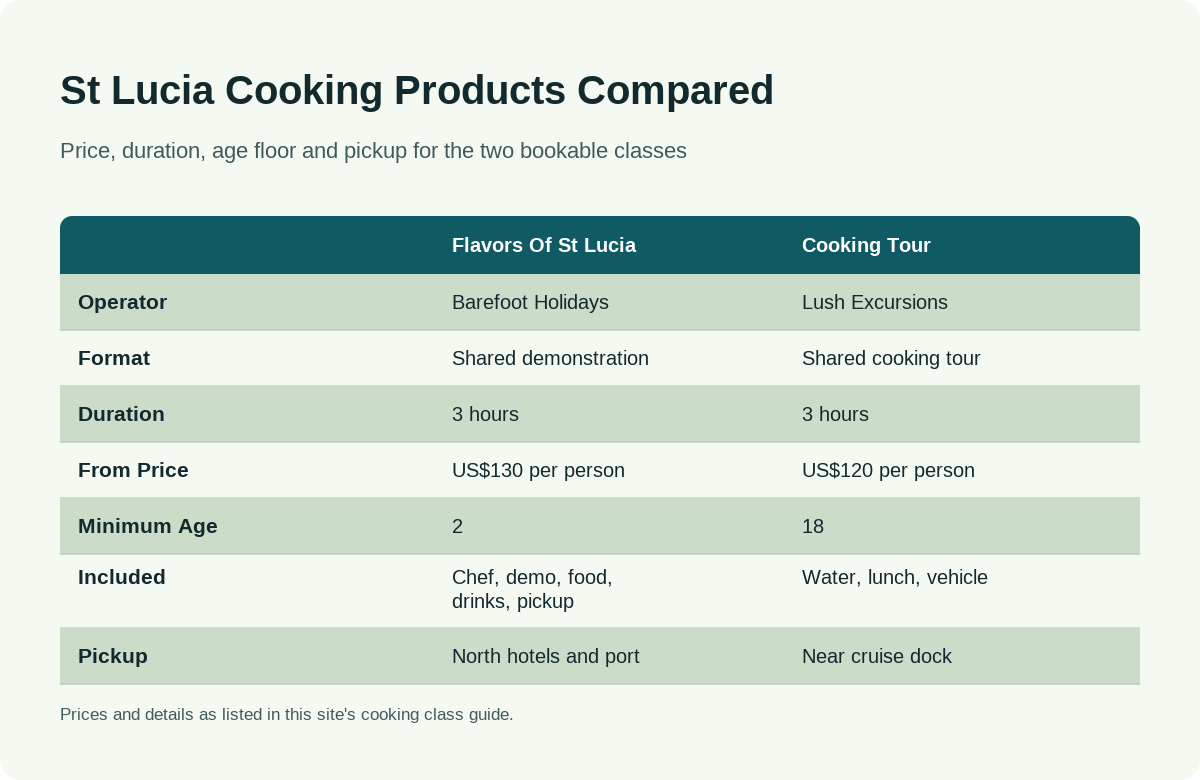
The two bookable cooking products differ on price, format, age floor and pickup, and the comparison is short because each booking line is short: the demonstration takes children from age 2 with pickup in the north, while the Marigot Bay cooking tour is adults-only at 18 with lunch included. The Flavors of St Lucia Culinary Experience, from US$130 per person, is a 3-hour shared demonstration with a professional chef, food and drinks included, hotel and port pickup for hotels in the north, a minimum age of 2 and a rating of 4.8 from 43 reviews. The Saint Lucian Cooking Tour at Marigot Bay, from US$120 per person, is a 3-hour shared cooking tour at Marigot Bay with lunch, bottled water and an air-conditioned vehicle included, a minimum age of 18, and a single review, too few to support any star claim.
| Flavors of St Lucia Culinary Experience | Saint Lucian Cooking Tour at Marigot Bay | |
|---|---|---|
| Operator | Barefoot Holidays | Lush Excursions |
| Format | Shared, cooking demonstration | Shared, hands-on cooking tour |
| Duration | 3 hours | 3 hours |
| From price | US$130 per person | US$120 per person |
| Minimum age | 2 | 18 |
| Included | Professional chef, cooking demonstration, food and drinks, hotel and port pickup and drop-off | Bottled water, lunch, air-conditioned vehicle |
| Excluded | Gratuities | No exclusion named |
| Pickup | Hotel and port pickup for hotels in the north | Driver meets travellers near the cruise dock and a meeting spot named on the booking page |
| Rating | 4.8 from 43 reviews | Too few reviews for a star claim |
| Cancellation | Free up to 24 hours before start | Free up to 24 hours before start |
The age gap is the sharpest dividing line. A family with a two-year-old has exactly one of these two options, and the same is true in reverse for an adults-only afternoon, since the Marigot Bay line sets its floor at 18. Pickup matters nearly as much: the Barefoot Holidays product collects from north island hotels and the cruise port, which makes it workable from a ship, while the Lush Excursions product meets travellers near the cruise dock at Marigot Bay. Both allow free cancellation up to 24 hours before the start, so a tentative hold costs nothing while you compare.
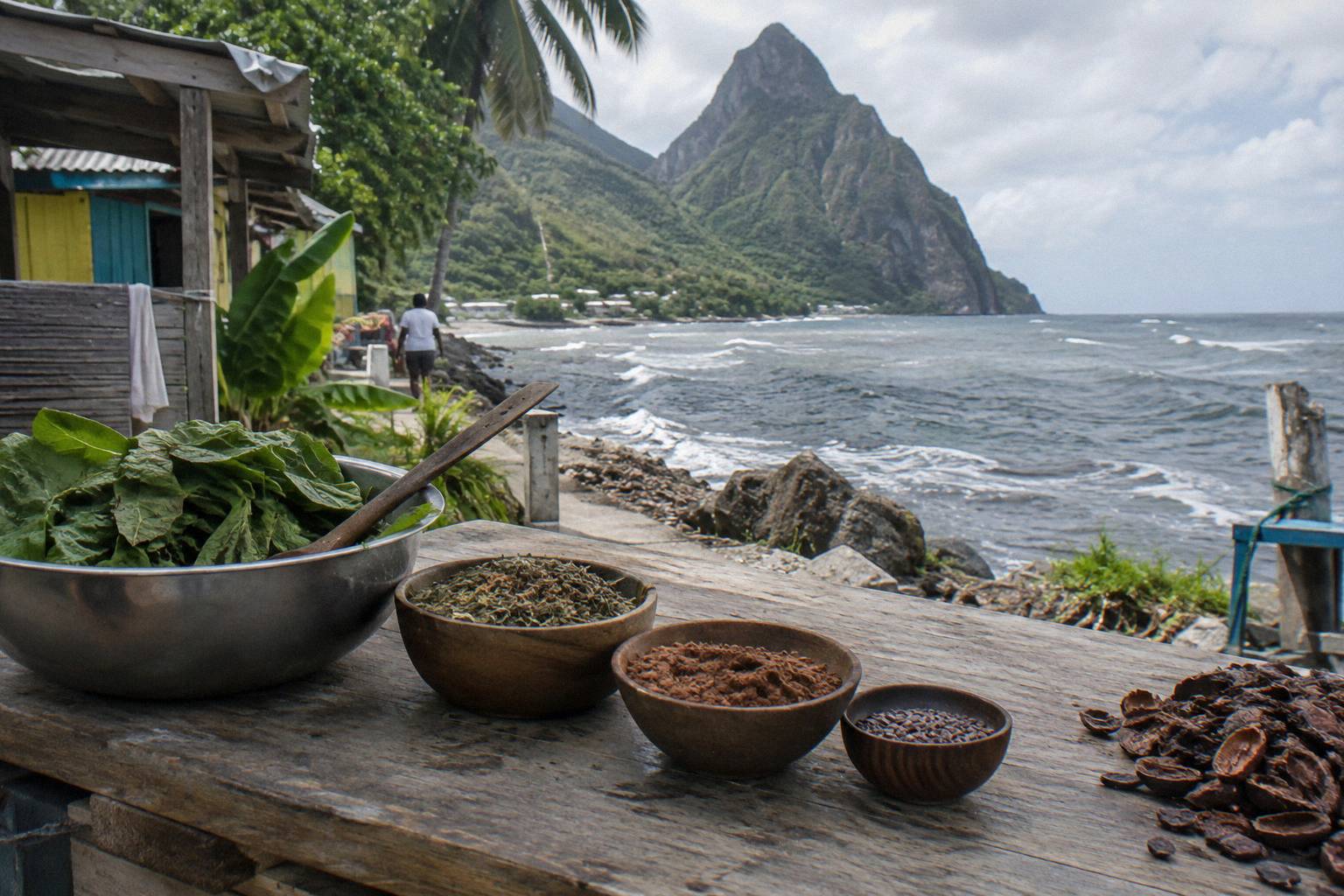
The Marigot Bay setting is its own argument. The bay is one of the island's photographed anchorages, and a cooking day there pairs the kitchen with the waterfront, with lunch included in the price. Its listing describes a hands-on class where guests prepare lunch, so expect to stand at the stove rather than watch from a stool. For a deeper look at what the day involves, the marigot bay cooking tour and what you cook guide works through the menu and logistics, and it applies the same rule: only the product's own line decides what is promised.
Price, Pickup And What Each Line Includes
Inclusions decide value more than the headline price, and the two cooking lines package quite different things: one bundles the chef, the demonstration, food, drinks and north island transport, while the other bundles lunch, water and a vehicle, with the Marigot Bay lunch prepared by the guests themselves. The demonstration includes the professional chef, the cooking demonstration itself, food and drinks, and hotel and port pickup and drop-off, with only gratuities excluded. The Marigot Bay tour includes bottled water, lunch and an air-conditioned vehicle. Neither price includes gratuity culture: the Tourism Authority's travel guidance notes a 10% VAT and a 10% service charge on hotel and restaurant bills, with tipping customary at about 10% to 12% of bills and not added automatically, so guides on either product are tipped separately.
Pickup geography shapes which product is realistic before price even enters the calculation. The Barefoot Holidays line covers hotels in the north and the port, which suits both stay-based visitors in the Rodney Bay area and cruise passengers docking in Castries. The Lush Excursions driver meets travellers near the cruise dock and a meeting spot named on the booking page at Marigot Bay, further south. A visitor staying in Soufriere finds that neither line collects from the south, which is a planning fact worth knowing before any booking is made. A useful companion read on budgeting across the whole category is the what tastings cost in St Lucia guide, which covers how prices behave across food, rum and chocolate products generally.
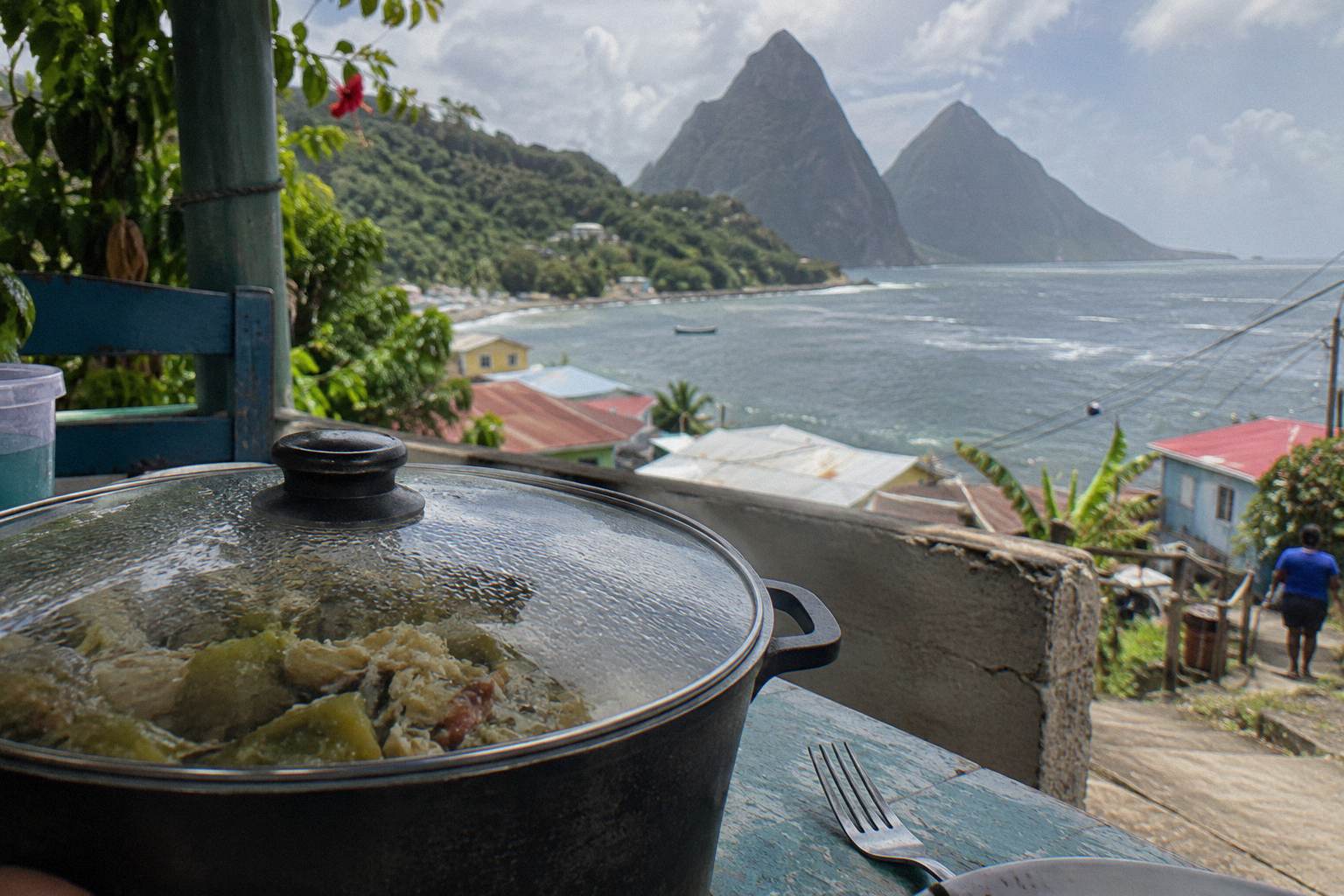
The price gap between the two is small, ten US dollars per person at the from-price, and it can invert on a given date. Prices vary by date and group, and the booking page shows the price for the date, so a family of four comparing the two should compare the live figures rather than the from-prices. See dates on the calendar before locking a plan, especially around the December to April high season when the island is busiest and driest. The from-price is a floor, not a quote, and treating it as a quote is how budgets slip on arrival.
Money on the ground behaves predictably. The Eastern Caribbean dollar is pegged at EC$2.70 per US$1, US currency is widely accepted, and change often comes back in EC$, per the Authority's guidance. Market stalls prefer cash, restaurants take cards more readily, and a cooking day that begins at the market should begin with small bills. None of this changes a tour price, which is charged in US dollars as the booking line gives it, but it decides how smoothly the hours around the tour run.
Choosing By Age: Children, Teens And Adults
Age floors split this category cleanly: the demonstration takes children from age 2, the Marigot Bay cooking tour takes adults from age 18, and no cooking product compared here sits in between, so the ages of your party decide the shortlist before price or format do. That makes the decision short for families. The Flavors of St Lucia Culinary Experience sets a minimum age of 2, includes food and drinks, and runs as a shared experience, so a household with small children has a workable cooking day without negotiating anything. The Marigot Bay line's 18 floor makes it an adults' afternoon by design, and its single review means there is no rating evidence either way.
Alcohol has its own rules on the island. The St. Lucia Distillers rule for its own visitor tour is that only adults 18 and older may taste, and several food products among the wider set of tastings carry their own minimums, but neither cooking line here names alcohol as an inclusion in a way that changes the age arithmetic. The demonstration includes drinks without specifying alcoholic ones; ask the operator once if that matters to your group. For a fuller treatment of age limits across the category, the kids on tasting tours in St Lucia guide maps every minimum age these tastings carry, including the food tours that welcome all ages.
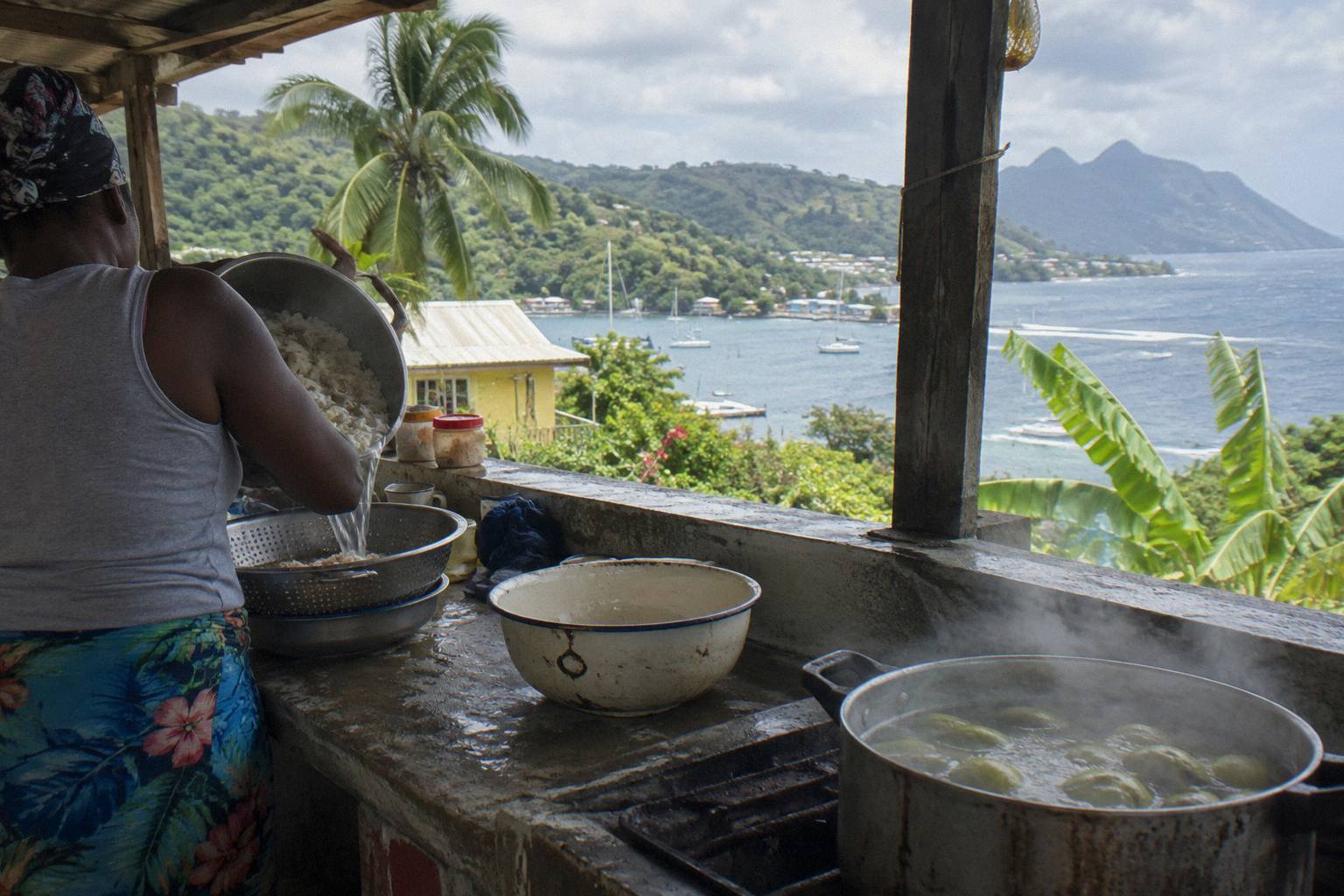
A middle option exists for groups that want food education without a stove. The Flavors of Soufrière Farm Visit and Tropical Fruit Tasting runs 2 hours from US$79 per person in Soufriere, shared, minimum age 1, with fresh fruit and an air-conditioned vehicle included; its line has one review, so no star claim. Many Creole classes begin with a market or garden visit, per the Tourism Authority, and a farm tasting is a compressed version of that opening act, useful with toddlers in tow or with grandparents who would rather walk than cook.
Teens old enough to cook seriously sit awkwardly between the two cooking products: too old to be the reason for the age-2 floor, too young for the age-18 Marigot Bay line. The demonstration is the fit, since a 15-year-old watching a professional chef work gets more from it than a toddler does, and the included meal means the afternoon ends fed. Ask the operator whether the demonstration can lean participatory for older children; one question on the booking page covers it, and the answer either confirms the fit or sends the family to a tasting walk instead.
| Product | Minimum Age | Format | Duration | From Price |
|---|---|---|---|---|
| Flavors of St Lucia Culinary Experience | 2 | Shared demonstration | 3 hours | US$130 per person |
| Saint Lucian Cooking Tour at Marigot Bay | 18 | Shared cooking tour | 3 hours | US$120 per person |
| Flavors of Soufrière Farm Visit and Tropical Fruit Tasting | 1 | Shared farm tasting | 2 hours | US$79 per person |
| St. Lucia Food and Rum Tour | 5 | Private driving food day | 4 to 6 hours | US$205 per person |
Cooking As Part Of A Wider Food Day
A cooking class can anchor a full food day, and among the tastings compared here, the driving tour is the product that wraps the most eating around the island itself, running 4 to 6 hours with breakfast, lunch, snacks, alcoholic beverages and a live cashew roasting included from US$205 per person. The St. Lucia Food and Rum Tour by The Other Tour St. Lucia is a private format with island-wide pickup, a minimum age of 5 and a rating of 5.0 from 243 reviews. It is not a class, and it does not teach technique, but it delivers the island's food in motion, from roadside stands to views of towns and villages, and its review pool is the deepest of all the tours compared here.
Pairing works in both directions. A morning demonstration followed by an evening of street food turns the lesson into a tasting list, since the Tourism Authority describes bakes as golden rounds of fried dough paired with saltfish, cheese, jam or smoked herring, and saltfish accra as deep-fried fritters found at markets, roadside vendors and community events. The Saint Lucian street food page also names roasted corn, grilled seafood and barbecued meats sold from roadside stands as the sun sets, which is the same repertoire a class teaches, out in the open. Cooking the dishes by day and finding them by night is how the island's food culture actually fits together.
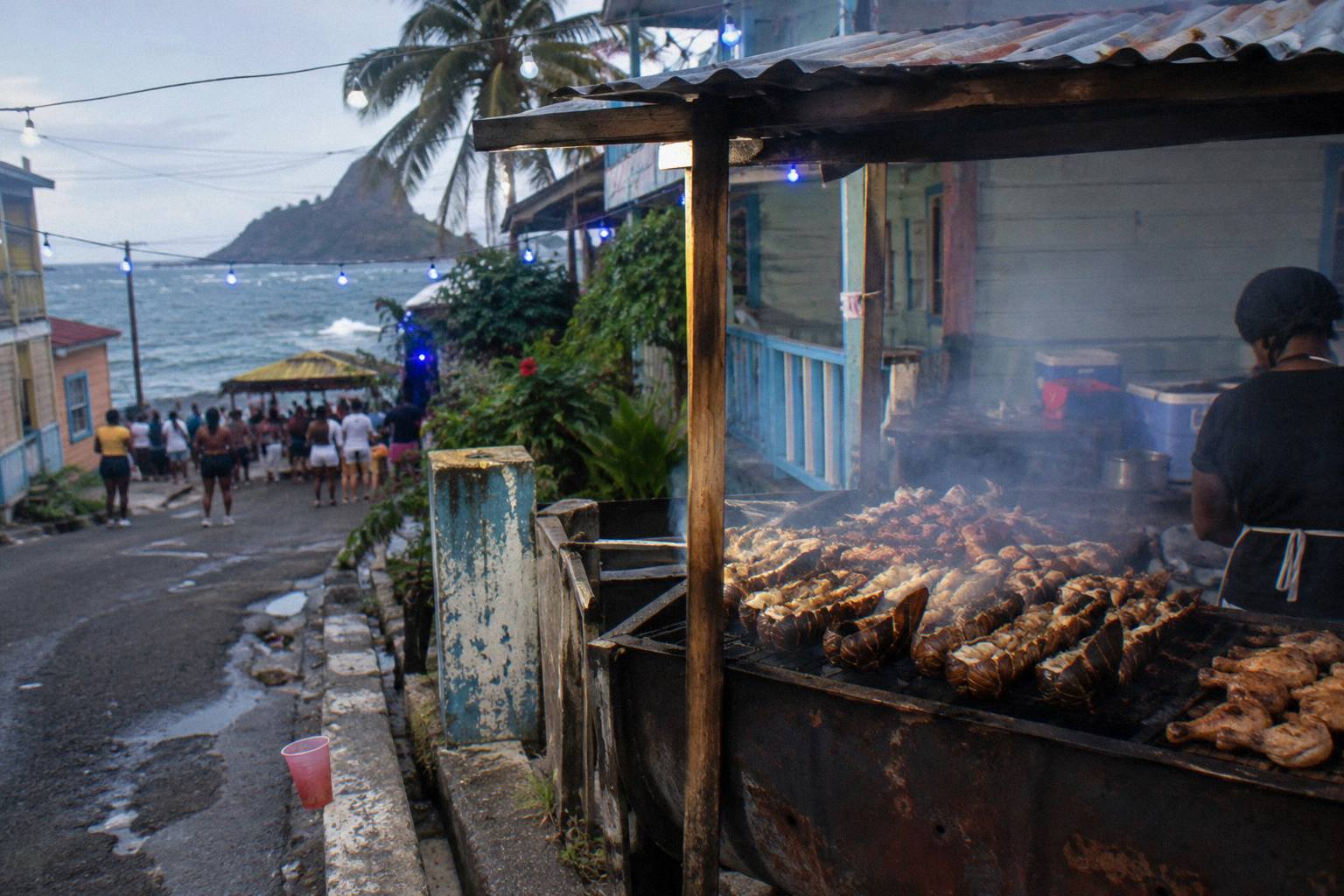
Timing the pairing around the calendar pays off. Creole Heritage Month runs throughout October and ends with Jounen Kwéyòl, Creole Day, on the last Sunday of the month, a period when Kwéyòl language, music, madras dress and cassava farine roasting come to the foreground, a festival the Tourism Authority traces back over forty years. A cooking class booked in October lands in the middle of that, though no class promises festival content, so ask the operator what changes in the month if it matters to your plans. Outside October, the same logic applies to any food day: the ingredients on the market tables move with the seasons, and the class moves with them.
Cooking Near The Market: Where Classes Begin
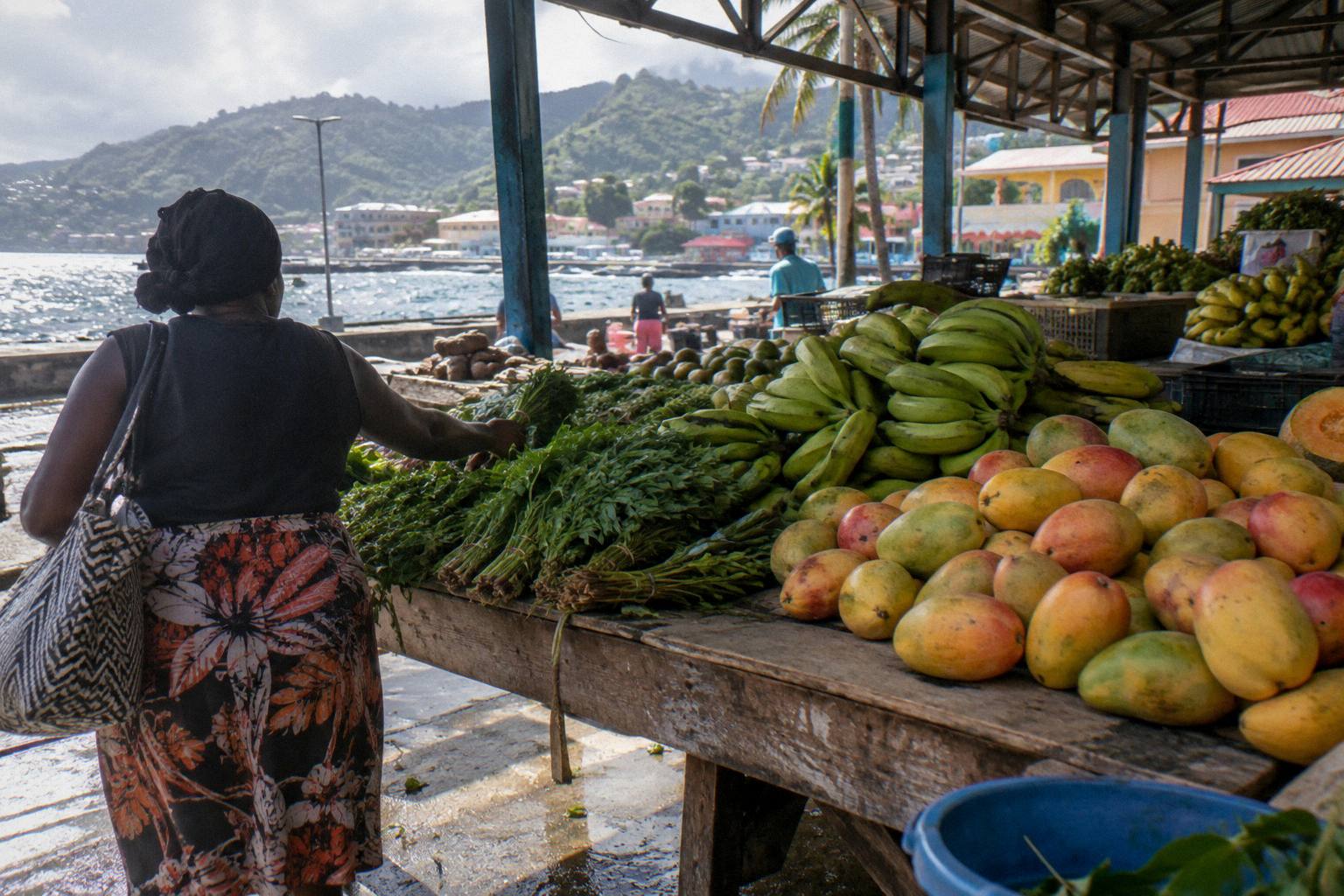
Many Creole classes open with a market or garden visit, and in Castries that means a market that has been trading since 1891, open every day, busiest on Saturday, with breakfast stalls from around six in the morning and over 10 local mango types on the seasonal tables. The Tourism Authority's market blog records those facts alongside the practical ones: payments run in Eastern Caribbean dollars, most vendors also take US dollars, cash is preferred and small bills are useful. Coconuts are opened on the spot, and the Saturday crowds bring farmers from all parts of the island, which makes it the liveliest morning to walk the aisles even if it is not the quietest.
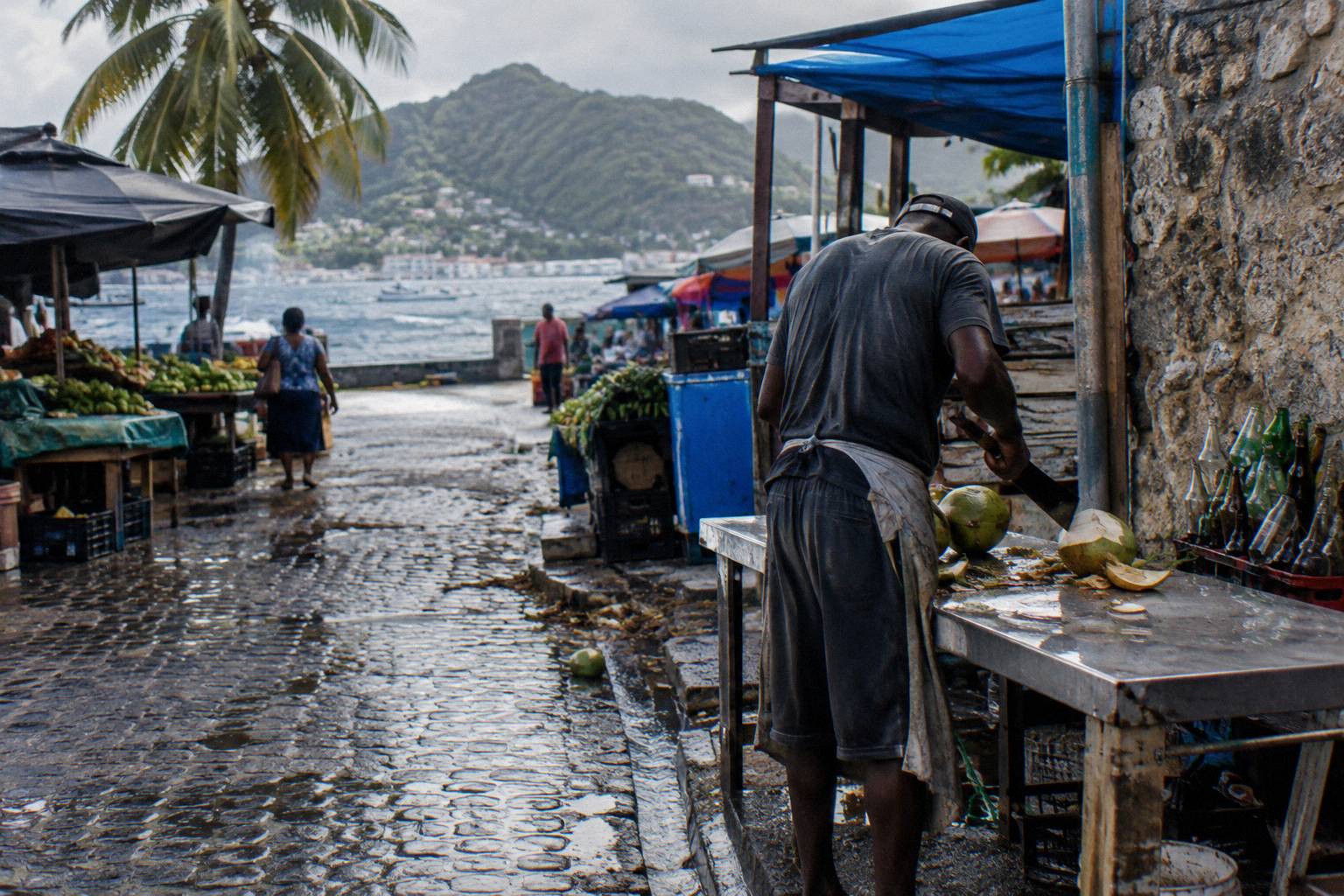
That opening act is not decoration; it is where the class's ingredients come from and where a visitor learns what a green fig actually looks like before it is boiled. The Authority also notes, in its own wording, that National Geographic rated the market among the top food markets in the world, a claim repeated here only as the Authority states it. The castries market walking tasting tour guide covers the market as a tasting destination in its own right, which is the natural companion to a cooking day that starts there. A garden-first class, meanwhile, moves through the same produce in the ground, which several farm-visit products among the tours compared here approximate.
The demonstration's north island pickup makes a market morning easy to bolt on, since Castries sits inside the pickup zone. A realistic day runs: early market wander, breakfast from a stall, then the 3-hour demonstration with its included food and drinks. Neither cooking product here includes a market stop in its own line, so treat that as your own arrangement rather than a promised segment, and check the booking calendar for start options before planning the morning around it. The Saturday version of that morning is the busiest and the most colourful, and also the one where small bills matter most.
For the fullest framing of what a St Lucia Food Tour style day can hold beyond the kitchen, the island's food, rum and chocolate products overlap enough that one booking decision usually informs the next, and the two cooking formats here are the cleanest entry point. A visitor who books the demonstration first often adds a market walk or a rum tasting second, because the class itself introduces the ingredients and the drinking culture around them. Working in that order also spreads the spending across the trip rather than front-loading it into one expensive day.
What Trips People Up Before You Book
Most booking mistakes in this category come from mixing up the two formats, assuming pickup covers the whole island, and reading a from-price as a fixed quote, and all three are avoidable with one question and one calendar check. The Marigot Bay tour is the hands-on option and the Flavors experience is the demonstration, so match the format to the afternoon you want before booking. The demonstration's pickup covers hotels in the north and the port, not the whole island, so a stay in Soufriere changes the arithmetic entirely. From-prices vary by date and group, and the booking page shows the price for the date.
The second family of mistakes is age and alcohol. Booking the Marigot Bay tour with a 16-year-old in the party fails its minimum age of 18, and assuming drinks on the demonstration are alcoholic, or that they are not, is a guess either way; ask once. The third is cancellation timing. Both cooking products allow free cancellation up to 24 hours before the start, which is generous, but a change made inside that window is a change made too late. Calendar discipline, checking the dates before planning the rest of a day around a slot, avoids all three failures before they cost anything.
A fourth, quieter mistake is skipping the class entirely on a short stay. A 3-hour cooking block is one of the most efficient uses of a single afternoon on the island: it feeds you, it teaches a dish you can reproduce at home, and on the demonstration it includes transport from the north. Cruise passengers with a limited window should weigh that efficiency against the port's own offerings, a trade-off the tasting tours for cruise ship passengers guide works through in detail for every docking scenario.
Common Questions About Cooking Days In St Lucia
What Does A St Lucia Cooking Class Teach?
The Saint Lucia Tourism Authority says Creole cooking classes teach green fig and saltfish, callaloo soup, fried plantains, fresh-caught fish and local cocoa desserts, and that many classes begin with a market or garden visit.
Is The Flavors Of St Lucia Culinary Experience Hands-On?
No. Its booking line names a professional chef and a cooking demonstration, so it is a demonstration format, with food and drinks included and a minimum age of 2.
Is The Marigot Bay Cooking Tour Hands-On Or A Demonstration?
It is hands-on: the listing describes a cooking tour where guests prepare their lunch with a local chef. It includes lunch, bottled water and an air-conditioned vehicle, runs 3 hours from US$120 per person, and sets a minimum age of 18.
Can Children Join A St Lucia Cooking Class?
Yes, on the demonstration, which sets a minimum age of 2. The Marigot Bay cooking tour sets its minimum age at 18, so it is adults only by its own line.
How Much Does A St Lucia Cooking Class Cost?
From US$130 per person for the Flavors of St Lucia Culinary Experience and from US$120 per person for the Marigot Bay cooking tour, both in US dollars. Prices vary by date and group, and the booking page shows the price for the date.
Do Cooking Tours In St Lucia Include Pickup?
It depends on the product. The demonstration includes hotel and port pickup and drop-off for hotels in the north. The Marigot Bay tour's driver meets travellers near the cruise dock and a meeting spot named on the booking page.